The magic of India’s havelis and heritage tours
India wraps itself around you slowly: in colour, in sound, in the warmth of people, and in the stories held inside its old walls. On my recent journey with Trailblazers India, I found those stories woven most beautifully into the havelis I visited: Haveli Dharampura and Golden Haveli in Old Delhi, and the gracious Samode Haveli in Jaipur. These are not just places to sleep; they are living chapters of India’s history, where courtyards still echo with the past and every carved arch and painted ceiling whispers of another time.
Havelis are traditional mansions that once belonged to merchants, nobility and influential families. Built around inner courtyards, they were designed as private worlds: layered with colonnaded verandas, decorated jharokha balconies, latticework screens and frescoed walls alive with mythological scenes and floral motifs. Time has weathered many of them, yet their bones remain regal: ochre and terracotta facades, sandstone pillars, cool flagstone floors and painted ceilings in lapis, jade and gold.
Stepping into a haveli is like crossing an invisible threshold. Outside is the chaos of modern India. Inside, the air shifts: it is cooler, softer, infused with incense and the faint trace of age-old stone and polished wood. You become acutely aware that you are walking through spaces that have witnessed generations of weddings, festivals, music and everyday family life.
Old Delhi - sensory chaos to haveli serenity
Old Delhi is an assault on the senses in the most exhilarating way. Riding in a rickshaw through its tangled lanes, life comes at you in bright, cinematic flashes:
Bursts of colour from sari shops, towers of marigold garlands and pyramids of spices.
Street food stalls hissing and sizzling, perfuming the air with frying pakoras, masala chai, and fresh parathas. Honking scooters, handcarts and stray cows all jostling for the same few inches of road. Mazes of alleys saturated with the smell of incense, cardamom, dust, ghee and fresh flowers.
Amid this sensory overload lies the unexpected oasis of Haveli Dharampura.
Haveli Dharampura - an oasis in Shahjahanabad
Turn abruptly off a noisy lane in Shahjahanabad and it seems impossible that something tranquil could be just a few steps away. Yet Haveli Dharampura appears like a mirage: a lovingly restored Mughal-era haveli wrapped around a graceful inner courtyard where the clamour of Old Delhi fades to a soft murmur.
Lanterns glow against warm, earthy walls, arched colonnades frame the courtyard, and intricate jali screens filter the light into delicate patterns, lending the whole space a quietly romantic air, as if the house has been waiting to be noticed again.As you wander through, small details reveal the care in its restoration: hand-painted floral borders, polished stone floors, original features preserved wherever possible. Antique-style furniture and thoughtful textiles give the rooms a subtly regal feel, all drawn together by the central courtyard that invites you to pause and breathe.
Dinner here becomes a fitting finale to a day in Old Delhi: refined yet rooted in the neighbourhood outside, close enough to feel the city’s pulse but cocooned in a setting that honours and elevates its history.
Golden Haveli - character in the heart of Old Delhi
Nearby, Golden Haveli offers another glimpse into Old Delhi’s heritage spirit. Where modern buildings press upwards and outwards, this haveli holds its ground with carved details, shuttered windows and interiors that seem to glow with low, golden light. The architecture here mirrors the layered past of the surrounding streets: a blend of Mughal-era influences, later additions and careful restoration. Courtyards, inner rooms, quiet balconies that overlook the jumble of the old city: each space feels like a frame around the everyday theatre of Old Delhi life. Staying or pausing here is to experience a more intimate, residential side of the old city, one that moves at a different pace from the market streets outside.
Jaipur - the surprise of Samode Haveli
Jaipur’s old city is a palette of rose and terracotta, its wide boulevards and riotous bazaars seemingly dipped in sunshine.
A Pink City rickshaw ride brings this world alive as you glide past spice shops and bangle stalls, temple bells ringing in the distance, while your female driver navigates confidently through the ebb and flow of traffic. It is a joyful, low‑impact way to feel Jaipur’s rhythm at eye level, from fruit sellers and flower markets to glimpses of grand old facades down side streets.
Hidden within this energy, Samode Haveli awaits as one of Jaipur’s great surprises: tucked into a quieter corner of the old city, reached via unassuming lanes before you step into a world that feels almost cinematic, where courtyards shaded by neem and frangipani trees are filled with birdsong that softens the urban soundtrack, and frescoed walls and arches are alive with Rajasthani motifs, elephants, floral vines and royal scenes.
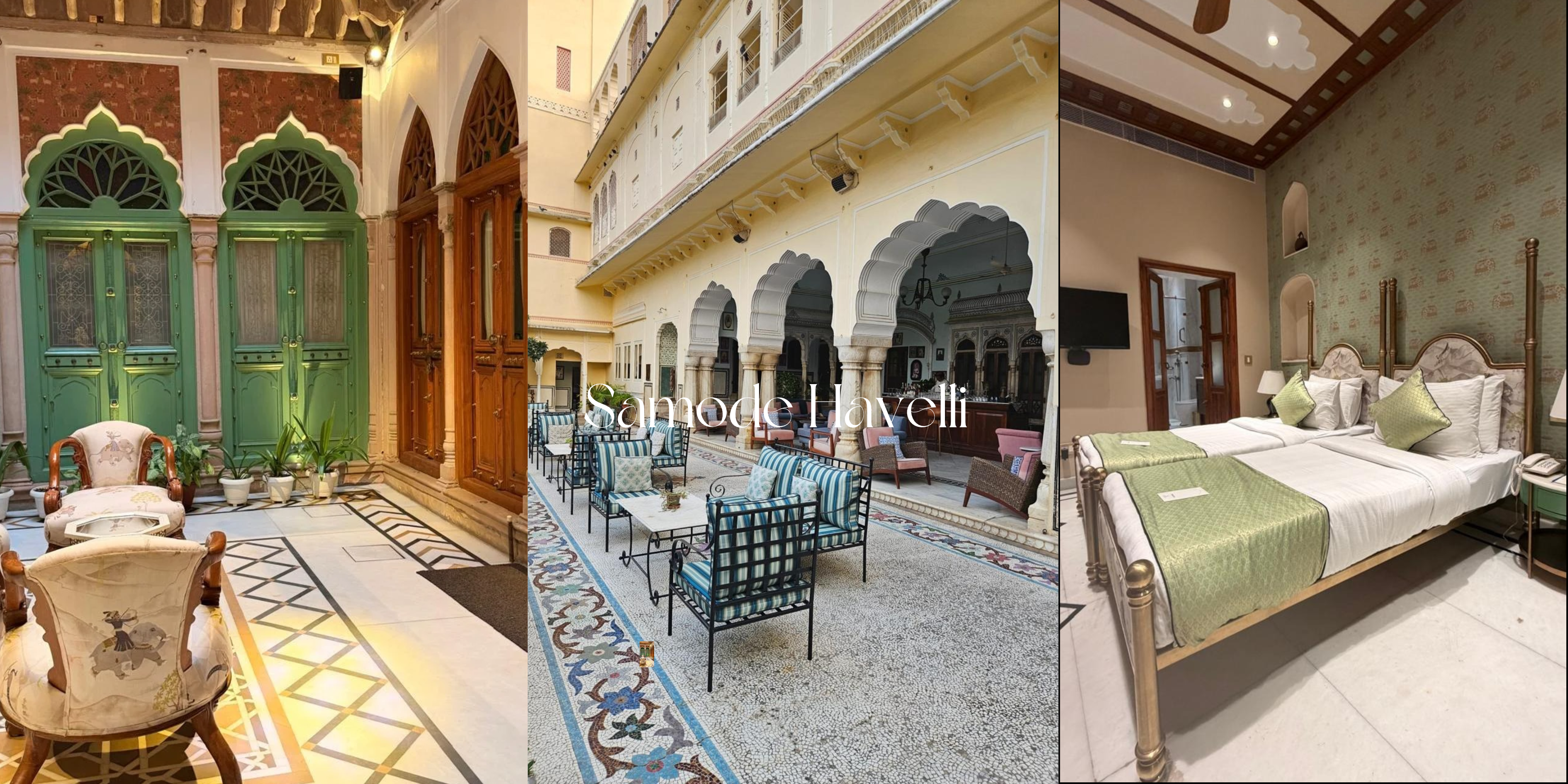
Samode Haveli feels less like a hotel and more like a living noble residence that has gracefully accepted its new role. The swimming pool lies framed by arches and pavilions, a calm rectangle of turquoise catching the golden Rajasthani light, while rooms and suites are layered with character: hand‑painted ceilings, old‑fashioned doors, niches with lamps, and rich textiles in deep saffron, emerald and ruby tones. For all its grandeur there is an intimacy here, the sense of staying in someone’s ancestral home rather than a formal property. You are moments from Jaipur’s hustle, yet once inside, the city feels distant and hushed, with only the faint echo of traffic to remind you that beyond these walls, life is still surging on.
Markets, chai and village life
India’s heritage is not confined to palaces and forts: it lives in fields, kitchens and village lanes.
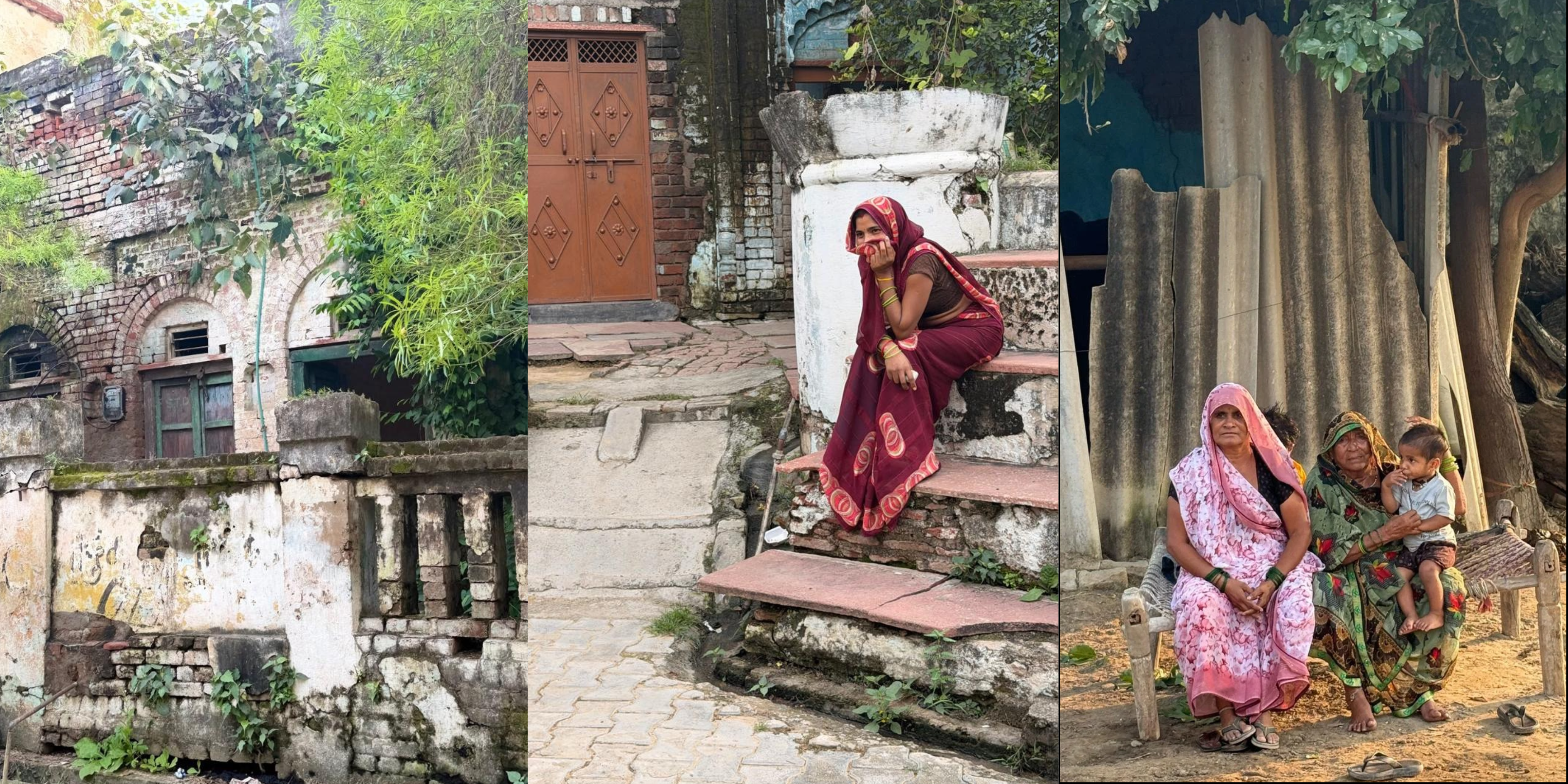
On rural heritage tours, you slip into a gentler rhythm of life: water buffalo grazing in the fields, women in vivid saris of fuchsia, saffron and emerald working from dawn till dusk, and children running barefoot through courtyards, laughing and waving as you pass. The scent of chai hangs in the air, strong and sweet with ginger and cardamom, brewed in battered pots and poured in a graceful arc into simple cups. It feels like hospitality in its purest form, offered with easy smiles and a curiosity that is open and genuine.
In places like Holipura, a heritage village walk reveals this quieter India in more detail. You wander past once-grand havelis, some lovingly restored, others empty yet still hauntingly beautiful, their faded frescoes and weathered wooden doors hinting at lives once lived within.
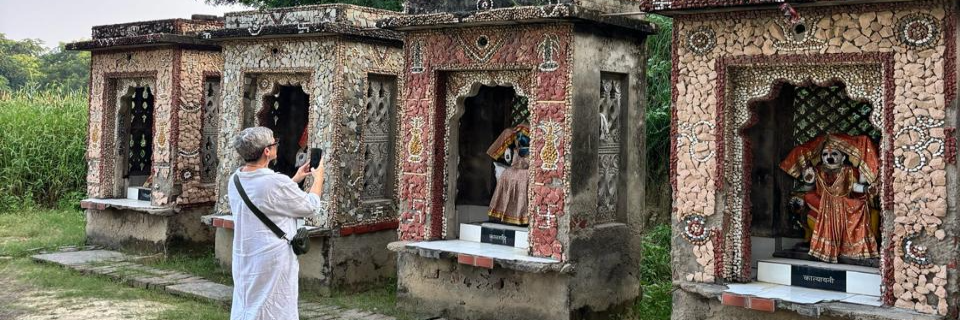
Nearby at Bateshwar Temple, a cluster of riverside shrines and temples forms the spiritual heart of the Chambal region, where the low hum of prayers, the flicker of oil lamps and the lap of water against stone create a deep, contemplative calm. It feels like a powerful counterpoint to the city’s clamour, and a reminder that India’s soul lives as much in its sacred riverbanks and village shrines as in its great monuments.
Walking with purpose
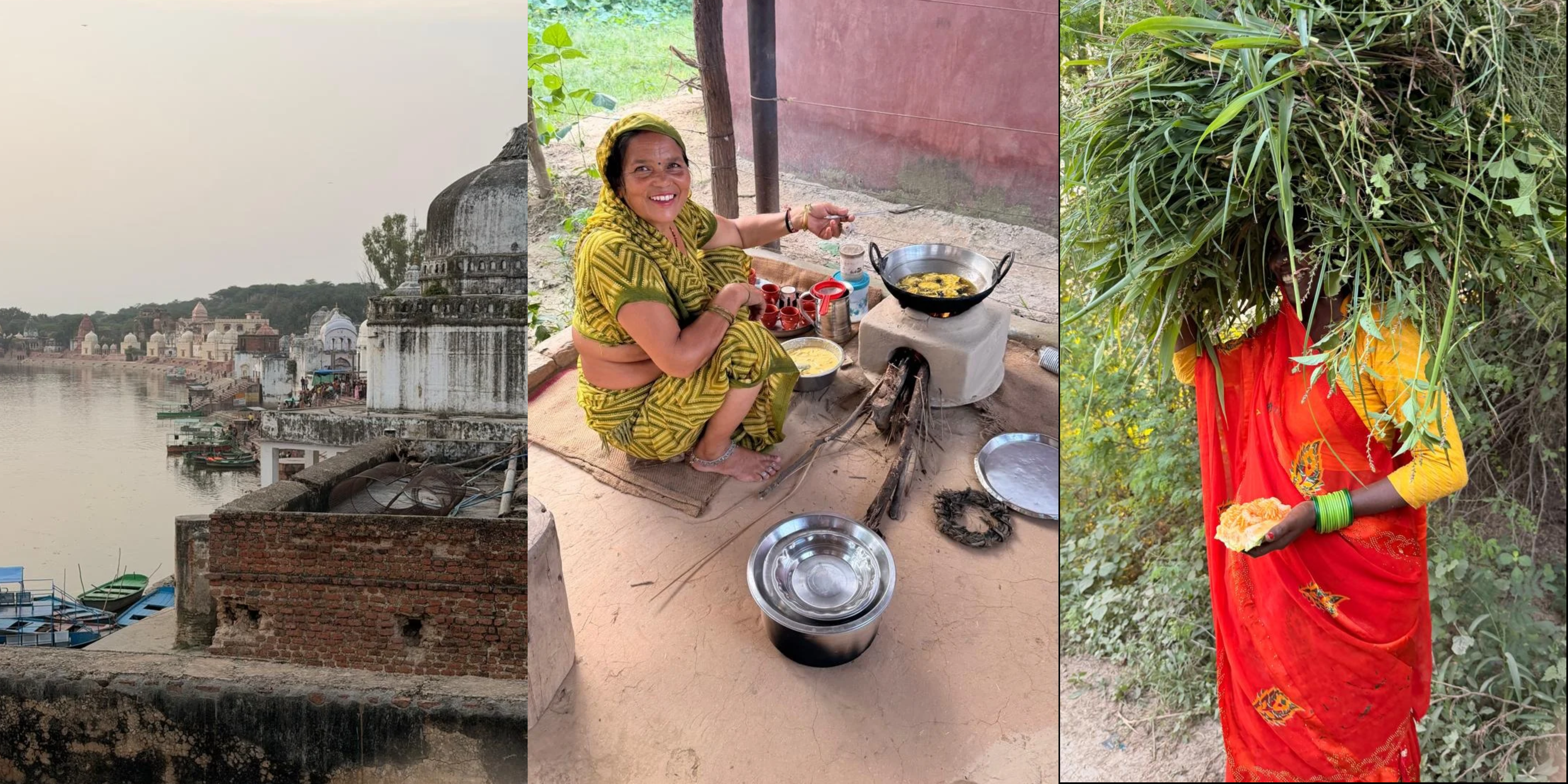
Returning to Old Delhi, a walking tour with Salaam Balak Trust adds a profound layer to the city experience. This is not about ticking off monuments; it is about understanding the lived reality of the people who call these lanes home. Your guide threads you through backstreets and bazaars, pausing to share stories of resilience, community and everyday survival.
One of my most lingering memories is of sundown on the rooftops of Old Delhi. As the sky melts into shades of apricot and mauve, children spill out onto flat roofs, laughing and calling to each other as they fly bright paper kites. Their silhouettes dance against a skyline of domes, minarets and tangled wires. Kites dip, swoop and tug at their strings, parents watch from doorways, and for a few quiet moments the whole city seems to pause and look up together
It is also an emotional overload: hospitality that is disarming in its sincerity, smiles that arrive before words, stories of both struggle and joy shared with quiet pride.
If you want to experience India’s culture and way of living in a truly traditional way, staying in heritage havelis is a beautiful place to start. These historic mansions are where architecture, history and everyday life meet: you might sleep beneath hand-painted frescoed ceilings, step straight out into lively bazaars and narrow lanes, then retreat to peaceful inner courtyards that have watched the world change and yet kept their dignity.
Living within these walls allows you to experience India from the inside out: wandering local markets rather than just passing through, sipping chai the way families have for generations, and soaking up the colours, sounds and scents that make India so vivid. It is an immersive way to feel the country’s true character, where every sense is gently, and wonderfully, overwhelmed.