A passage through India
Southern India
Read about my wonderful journey through India
A Passage Through India
Our unforgettable journey through Southern India
Our journey through Southern India was an experience filled with wonderful contrasts, fascinating history and unforgettable memories. From ancient temples and colourful markets to charming colonial streets, spice-scented plantations and peaceful backwaters, every day brought something new to discover.
We travelled through Tamil Nadu and Kerala, experiencing the incredible variety of this part of India, meeting its people, enjoying its food and discovering places that have been shaped by centuries of history and tradition.
Here is a little account of our journey and some of the highlights we enjoyed along the way.
Day 1 – Arrival in Chennai: Our introduction to Southern India
Our adventure began in Chennai, the vibrant capital of Tamil Nadu and one of India's most fascinating coastal cities.
Formerly known as Madras, Chennai is a wonderful mix of old and new, with a rich cultural heritage sitting alongside the energy of a busy modern city.
After a fairly lengthy visa-checking process at the airport, we were delighted to meet our lovely driver, Praveen, who would be accompanying us on our travels. We then set off on the two-hour drive to Mahabalipuram, where we were staying at the beautiful Taj Fisherman's Cove Hotel.
One of our first experiences was discovering the extraordinary ancient monuments of Mahabalipuram. Founded by the Pallava kings, these remarkable structures were carved from rock during the 7th and 8th centuries and are a real testament to the craftsmanship of the time.
We explored the famous Rathas, temples carved in the shape of chariots, the Mandapas or cave sanctuaries, and the enormous open-air reliefs, including the magnificent 'Descent of the Ganges'. The intricate carvings and thousands of figures celebrating Shiva were quite extraordinary. It was a fascinating introduction to India's ancient history.
Day 2 – Along the Coromandel Coast to Puducherry
After our first taste of India, we continued south along the scenic East Coast Road towards Puducherry, formerly known as Pondicherry.
It was a lovely drive, with glimpses of the Bay of Bengal, palm trees and traditional fishing villages along the way.
On arriving in Puducherry, we immediately noticed a change in atmosphere. This former French colonial settlement has a character all of its own, with pretty pastel-coloured houses, elegant colonial buildings, leafy boulevards and pavement cafés. It almost felt as though we had stepped into a little corner of France in India!
After checking into our hotel, we set out to explore some of the town's most interesting sights.
Sri Aurobindo Ashram
We visited the Sri Aurobindo Ashram, founded in 1926. What began as a small group of just two dozen disciples has grown into a large and diverse community. It was interesting to learn about its history and the spiritual influence it has had on Puducherry.
Basilica of the Sacred Heart of Jesus
Another highlight was the beautiful Basilica of the Sacred Heart of Jesus, built by French missionaries in 1908. Its impressive Roman-Byzantine architecture and beautiful design make it one of Puducherry's most recognisable landmarks. It was granted the status of a Basilica in 2011.
Puducherry Museum
We also visited the Puducherry Museum, situated in Bharathi Park. It was a lovely opportunity to discover more about the town's fascinating past through its collection of historical artefacts and exhibits.
Promenade Beach
We finished our exploration with a visit to Promenade Beach. With its beautiful coastline, shimmering sand and lovely sea views, it was a relaxing place to take in the atmosphere of this charming seaside town.
Puducherry certainly made an impression on us, particularly its unusual blend of Indian and French influences.
Day 3 – Puducherry to Kumbakonam
Today we travelled towards Kumbakonam, a fascinating temple town in Tamil Nadu, situated between two rivers.
Once an important centre during the powerful Chola dynasty, Kumbakonam is famous for its colourful temples, traditional architecture and rich religious heritage. Everywhere you look, there are beautiful temple towers rising above the town.
Along the way, we visited the Sri Sarangapani Temple, an important Hindu temple dedicated to Lord Vishnu.
The temple is one of the 108 Divya Desams, sacred places celebrated by the twelve Alwar poet saints. Its history stretches back many centuries, with contributions from the Medieval Cholas, Vijayanagar Empire and Madurai Nayaks.
It was fascinating to see another example of the extraordinary temple architecture that makes this part of India so special.
After our visit, we continued to our hotel and settled in for the evening.
Day 4 – On to Madurai: Into the heart of Tamil Nadu
We continued our journey inland towards Madurai, one of India's oldest continuously inhabited cities.
The scenery changed as we travelled, with agricultural fields, small villages and traditional towns replacing the coastal landscape.
Madurai is famous for its magnificent temples and vibrant religious life, and it is a place that really captures the spirit of Tamil Nadu.
On arrival, we began exploring some of its most famous landmarks.
Thirumalai Nayak Palace
Our first stop was Thirumalai Nayak Palace, built in 1636 by King Thirumalai Nayak.
Although much of the original palace was later demolished by his grandson, who wanted to use its materials to build his own palace in Tiruchirapalli, the surviving structure still gives a wonderful impression of its former grandeur.
It was fascinating to imagine what this impressive building must have looked like in its heyday.
Sri Meenakshi Sundareswarar Temple
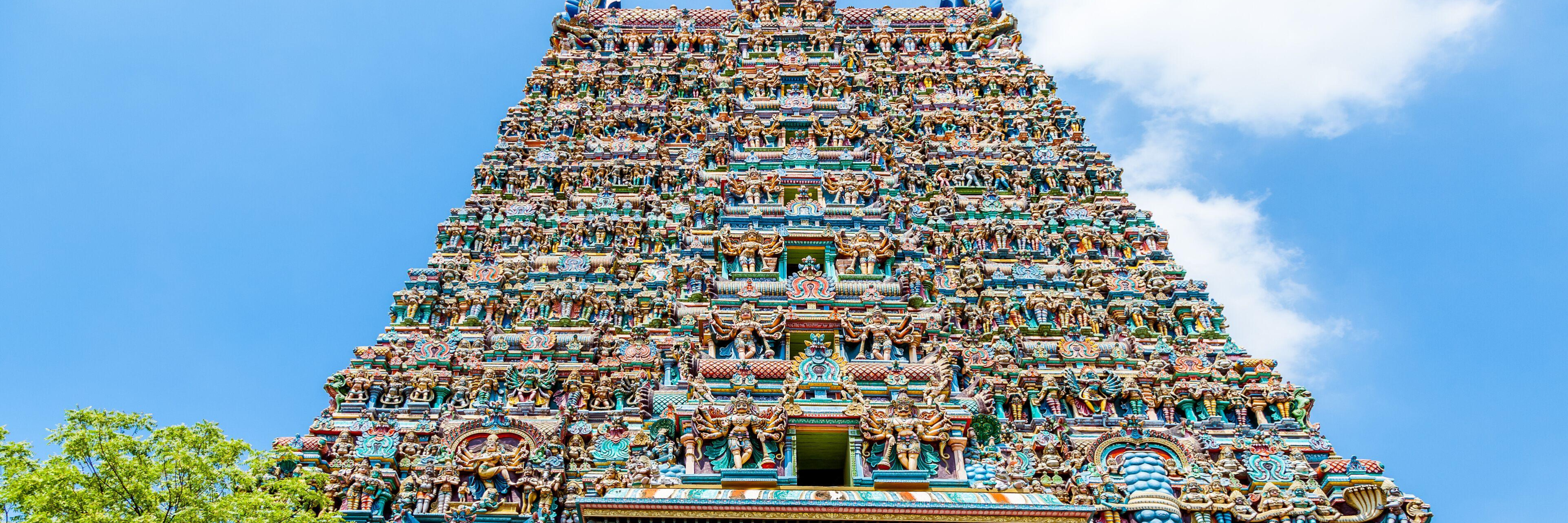
No visit to Madurai would be complete without seeing the magnificent Meenakshi Temple. In many ways, it is the heart and soul of the city.
Dedicated to Lord Shiva and Goddess Parvati, the temple is famous for its extraordinary Dravidian architecture. Its enormous, brightly coloured gateway towers, known as gopurams, are covered in thousands of wonderfully detailed sculptures depicting gods, goddesses and mythological stories.
Inside, we found a maze of pillared halls and shrines, creating an atmosphere that was both impressive and deeply spiritual.
The evening ceremony at Meenakshi Temple
One of the most memorable experiences of our stay in Madurai was witnessing the evening ceremony at the temple.
As night falls, a special ritual takes place in which the image of Lord Shiva is carried from his shrine to join his consort Parvati in another part of the temple.
Known as the Going to Bed Ceremony, it was a fascinating tradition to witness and a lovely way to end our day in this remarkable city.
Day 5 – Madurai to Thekkady: Into the Western Ghats
Today we left the plains of Tamil Nadu behind and headed west towards Thekkady, crossing into the beautiful state of Kerala.
The drive was particularly scenic as we climbed into the Western Ghats. The roads wound through forested hills, lush greenery and plantations, with the landscape becoming more dramatic as we gained height.
Thekkady is well known for its wildlife, spice plantations and tropical scenery. This region produces cardamom, pepper, cinnamon and cloves, and even the air seems to carry the wonderful fragrance of spices.
A visit to a spice plantation
One of the highlights was a guided walk around a local spice plantation.
It was lovely to learn about the many different spices grown in the region and to see how they are cultivated. We discovered just how many varieties are produced here and gained a much better appreciation of the spices that play such an important part in Indian cooking.
After our walk, we enjoyed a delicious home-cooked lunch prepared by our hosts. It was a lovely personal touch and a chance to experience some traditional local hospitality.
After checking into our hotel, we headed out again in the evening to watch a demonstration of Kalaripayattu, Kerala's famous traditional martial art.
It was quite a spectacle, with the performers demonstrating their impressive skills, speed and agility. A very different experience from the temples and historical sights we had visited earlier!
Day 6 – Thekkady to Kumarakom: From the hills to the backwaters
We began the day with a boat trip on beautiful Periyar Lake, situated within the Periyar wildlife sanctuary.
The lake is surrounded by lush forest, and the scenery is quite magical. One of the most unusual sights is the skeletal remains of trees rising out of the water, giving the lake an almost prehistoric appearance.
The early morning mist drifting across the water adds to the atmosphere, making it a wonderfully peaceful experience.
The lake is also a popular place for spotting wildlife, including elephants, and we enjoyed taking in the beautiful surroundings from the boat.
After our time at Periyar, we set off on the approximately three-and-a-half-hour drive to Kumarakom, a distance of around 121 kilometres.
What a contrast from the hills of Thekkady! Kumarakom is a beautiful tropical area on the banks of Lake Vembanad, famous for its peaceful backwaters, abundant birdlife and boats gently moving along the waterways.
On arrival, we checked into our hotel and had the rest of the day to relax and enjoy this tranquil setting.
Day 7 – Kumarakom to Alappuzha: A night on the backwaters
Today we continued to Alappuzha, also known as Alleppey, a place often referred to as the 'Venice of the East'.
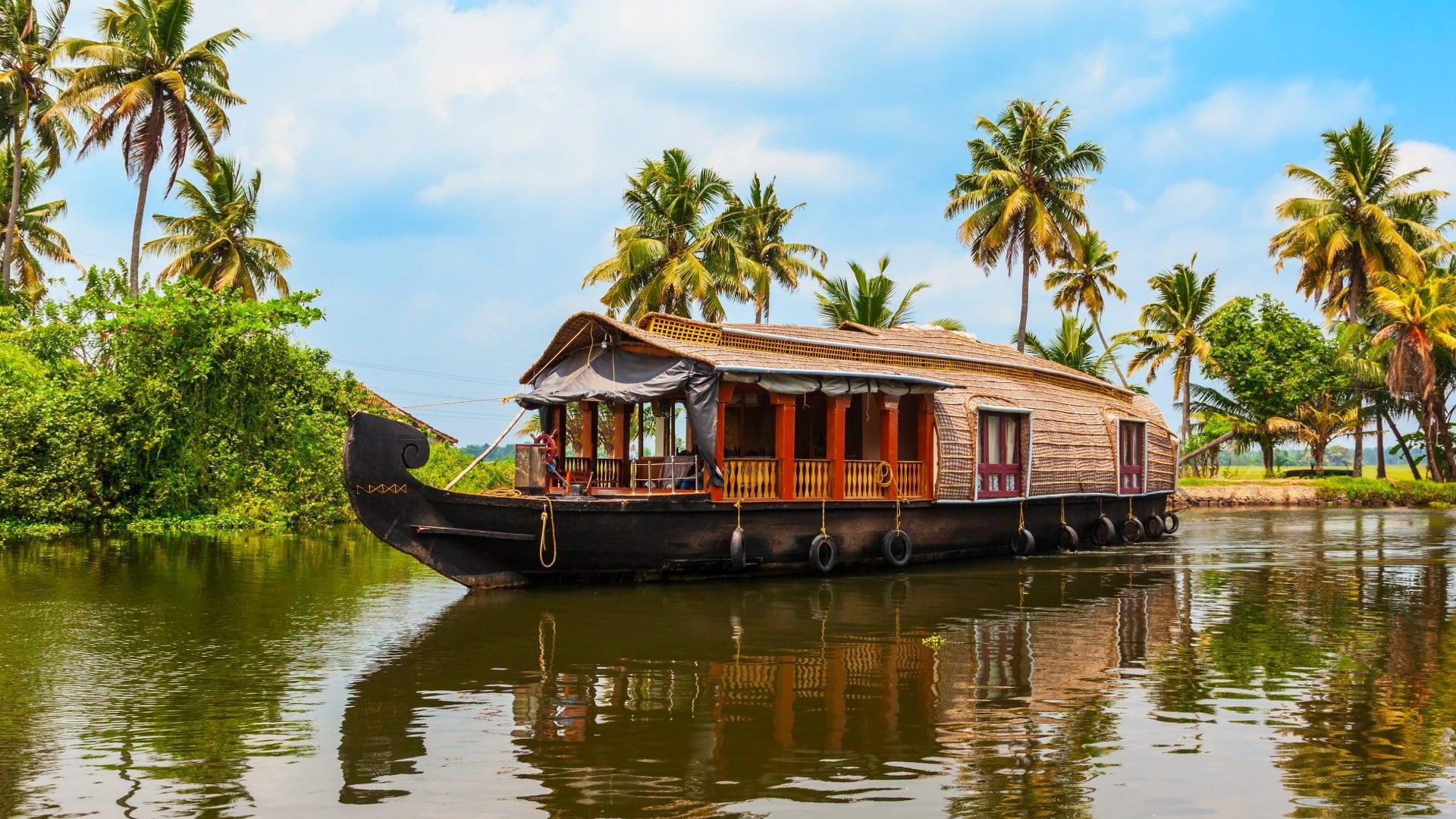
It is famous for its wonderful network of canals and backwaters, where traditional boats and houseboats travel through a landscape of palm trees, small villages and lush green countryside.
The waterways are an important part of everyday life here, and it was lovely to see a very different side of India, far removed from the busy cities and bustling streets we had experienced earlier.
Our accommodation for the night was particularly special. We stayed aboard the Spice Routes Luxury Houseboat, cruising along the beautiful Alleppey backwaters.
It was a wonderful opportunity to slow down, enjoy the scenery and simply watch life unfold along the water. Certainly one of the experiences that made this trip so memorable.
Day 8 – The backwaters to Cochin: Discovering Kerala's heritage
After breakfast, we said goodbye to our houseboat and continued our journey to Cochin, also known as Kochi.
Cochin has been an important trading port for centuries, attracting merchants from Arabia, China, Europe and many other parts of the world. This fascinating mix of influences can still be seen in its architecture, food and traditions.
On arrival, we began exploring Fort Kochi, with its charming colonial streets, historic buildings and relaxed atmosphere.
One of the most famous sights here is the Chinese fishing nets, which line the waterfront. These enormous structures, believed to have been introduced by Chinese traders, are quite extraordinary and have become one of the defining images of Fort Kochi.
We also discovered the historic streets and buildings that reflect the city's Portuguese, Dutch and British connections.
Other highlights included St Francis Church, one of the oldest European churches in India, and Mattancherry Palace, often referred to as the Dutch Palace, with its beautiful murals and fascinating history.
We also explored the nearby Jewish Quarter, with its antique shops, spice warehouses and historic synagogue. It was particularly interesting to see how the different communities that traded and settled here have all contributed to Cochin's unique character.
In the evening, we had the opportunity to experience a traditional Kathakali performance, one of Kerala's most famous classical art forms.
Day 9 – Cochin: More discoveries and a taste of traditional Kerala
We spent another day discovering more of Cochin, a city that has so much history and character.
Chinese Fishing Nets
We had another look at the famous Chinese fishing nets along the waterfront. Their enormous cantilevered structures, hanging over the water like giant hammocks, are quite remarkable and have become an iconic sight in Fort Kochi.
Santa Cruz Basilica
We visited the beautiful Santa Cruz Basilica, one of Kerala's nine Basilicas. Its striking architecture and fascinating religious history make it one of the most important landmarks in Fort Kochi.
St Francis Church
Another interesting visit was St Francis Church, originally built in 1503. It is one of the oldest European churches in India and has witnessed many of the changes that have taken place in the region throughout the centuries.
Standing within its historic walls, it was easy to imagine the many different people and events that have shaped this part of the country.
Mattancherry Palace – The Dutch Palace
We also visited Mattancherry Palace, popularly known as the Dutch Palace, although it was originally built by the Portuguese.
The palace is particularly well known for its beautiful murals and offers a fascinating glimpse into the history of the rulers of Cochin.
Kathakali Dance Performance
One of the most memorable experiences was watching a traditional Kathakali dance performance.
Kathakali is a very distinctive form of classical Indian storytelling, combining expressive facial movements, elaborate hand gestures, intricate footwork, music and dramatic costumes.
The performers' make-up is incredibly detailed and colourful, and their ability to tell stories through movement and expression is quite extraordinary.
It was a wonderful insight into Kerala's cultural traditions and a fitting highlight of our time in Cochin.
We spent the night at the lovely Brunton Boatyard, a fitting place to enjoy our final evening in this historic port city.
Day 10 – Cochin: Time to say goodbye
Sadly, our ten-day adventure through Southern India came to an end today.
After breakfast, we transferred to Cochin International Airport for our onward journey home.
Looking back, we had experienced such an incredible variety of places and experiences. From the bustling streets of Chennai and the French colonial charm of Puducherry to the spectacular temples of Madurai, the spice-scented hills of Thekkady and the peaceful waterways of Kerala, every destination had offered something different.
We had discovered ancient history, fascinating religious traditions, beautiful architecture, wonderful scenery and, perhaps most importantly, experienced the warmth and hospitality of the people we met along the way.
The houseboat journey, the spice plantation, the temple ceremonies and the colourful Kathakali performance will all remain special memories.
This was so much more than just a holiday. It was a wonderful journey through the history, culture, traditions and natural beauty of Southern India, and one that gave us memories to treasure for many years to come.