Under a Sky Full of Stars: My Top Places to Experience Astrotourism
From Canada’s wild dark‑sky parks to Chile’s high desert; incredible ways to turn the night sky into the highlight of your next holiday.
There is something quietly magical about standing under a truly dark sky. No traffic noise, no orange streetlights, just the slow reveal of more and more stars as your eyes adjust. Over the last few years,s there has been an increase in people asking for that feeling: not just a standard “sun, sea and sand” break, but a holiday where the night is as much a part of the story as the day. That is where astrotourism comes in. In this blog I wanted to share what astrotourism actually is, why it has become so popular, and some of my favourite places around the world to experience truly spectacular night skies: from Canada’s wild national parks and ethereal Northern Lights, to the high, otherworldly desert of northern Chile and a few lesser known gems you might not have considered yet.
What is astrotourism?
Astrotourism is simply travel that is centred around the night sky: stargazing, seeing the Milky Way in all its glory, hunting for the Northern Lights, visiting observatories, even timing a trip around a meteor shower or eclipse.
For many of us in the UK, our skies are so washed out by light pollution that we forget just how many stars are actually up there. The first time you stand under a truly dark sky is often a bit of a jaw‑drop moment. You see the Milky Way stretching right across the horizon, satellites drifting past, maybe a shooting star or two. It is humbling and oddly calming, and I think that is part of why astrotourism has really taken off: in a noisy world, it is a chance to feel small in the best possible way.
Asrotourism isn't just for 'the Geeks', you can simply add a couple of nights in a dark‑sky location to a wider itinerary. You do not need a physics degree, and you do not need to sleep in a tent with no loo. You can do this with log cabins, boutique hotels and hot tubs if that is more your style. Here are some of my favourite destinations worth considering.
Canada: big skies, bright stars and Northern Lights
Canada is one of the world’s great astrotourism destinations, and it works beautifully for UK travellers. Similar time zones to the east coast of the USA, friendly, safe and packed with stunning landscapes that look good both by day and by night.
One of the easiest ways to dip your toe into dark skies in Canada is to build it into a Rockies itinerary. You might spend a few days exploring Banff and Lake Louise, then head up the Icefields Parkway to Jasper. By day it is all turquoise lakes and snow‑dusted peaks; by night, Jasper National Park becomes one of the largest Dark Sky Preserves on the planet. The stars feel almost three‑dimensional here, and in autumn there is even a dedicated Dark Sky Festival with talks, telescope sessions and family‑friendly events.
Chasing the Northern Lights:
Of course, when we think of astrotourism, the Northern Lights are usually the first thing that comes to mind. Canada is fantastic for aurora, but you have some wonderful options closer to home too.
Iceland is an easy‑to‑reach favourite. A few nights in
Reykjavik for galleries, geothermal pools and great food, then at least two or
three nights out in the countryside for darker skies. On a clear night, you can
sit in a hot tub watching the lights dance over snow‑covered lava fields. Even
if the aurora refuses to play ball, you still get geysers, waterfalls and black‑sand
beaches, so it never feels like a wasted trip.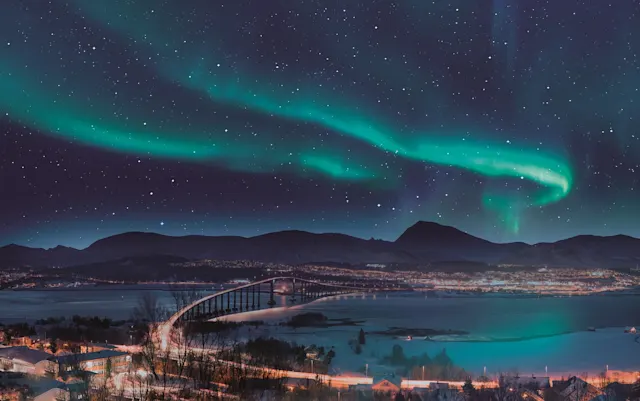
Scandinavia is another Northern Lights classic. Tromsø in Arctic Norway is a lively little city with a “frontier” feel, ideal if you like the idea of husky sledding, fjord cruises and a bit of nightlife alongside your sky‑watching. Finnish Lapland and Swedish Lapland offer a slightly quieter, cosier experience: glass‑roofed igloos, log cabins with private saunas, reindeer sleigh rides and vast forests under star‑filled skies. Abisko in Swedish Lapland is often highlighted for its unusually clear conditions and is a great choice for more serious aurora hunters.
Atacama Desert: a window to the universe
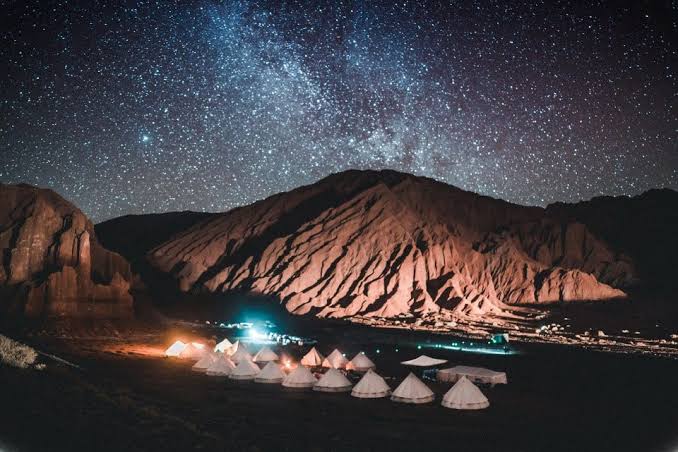
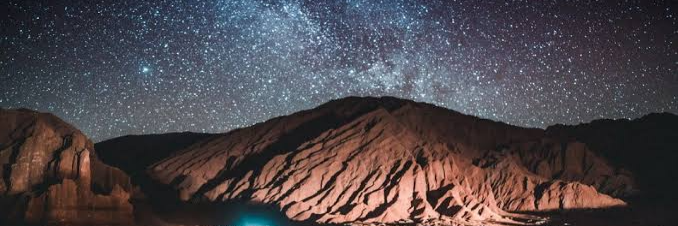
If you picture a classic “astronomy” landscape, chances are you are imagining something that looks a lot like northern Chile. The Atacama Desert is one of the driest places on Earth, high enough to sit above much of the atmospheric haze and almost completely free of light pollution. It is no accident that some of the world’s most important observatories are based here.
For travellers, this means incredibly clear, steady skies and views of the Southern Hemisphere stars that we simply never see from the UK. The Milky Way seems to spill right over your head. Constellations you might have only read about suddenly become obvious, and some lodges even have their own small observatories or resident astronomers who will talk you through what you are seeing.
By day, the Atacama is just as extraordinary. Think rose‑coloured valleys, steaming geyser fields, vast salt flats and flamingo‑dotted lagoons. You can easily combine a few nights here with time in Santiago, Valparaiso or with a wider South America itinerary that might also include Patagonia, the Chilean wine valleys or even Easter Island.
Desert skies in Africa and the Middle East
You do not have to go to Chile to experience that “endless stars over empty land” feeling. There are some outstanding dark‑sky options in Africa and the Middle East that combine beautifully with other holiday experiences.
Namibia is a standout. The Namib Desert is already one of
the most photogenic landscapes in the world, all rust‑coloured dunes and
skeletal camelthorn trees, and once the sun drops it becomes a natural
planetarium. Many camps and lodges here are deliberately low‑key with their
lighting, some with stargazing decks or simple roll‑out beds on private
terraces so you can literally sleep under the Milky Way. It is a perfect
pairing with safari: big cats and elephants by day, Southern Cross by night.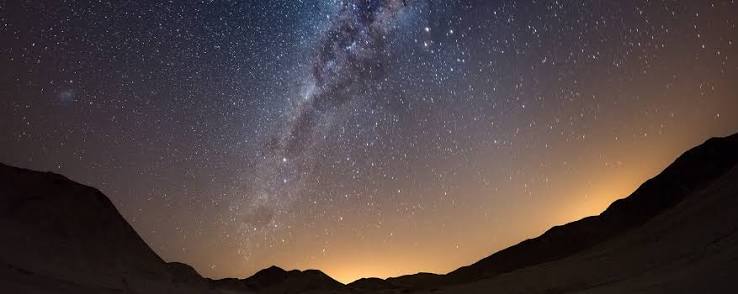
Jordan’s Wadi Rum offers a different kind of desert drama: red sandstone cliffs, sweeping sand valleys and a very clear night sky. Staying in a Bedouin‑style camp, with dinner cooked over the fire then an hour or two lying back to watch for shooting stars, makes a wonderful contrast to the history of Petra and the relaxation of the Dead Sea. Again, this is astrotourism woven into a wider cultural journey, rather than the only focus.
The Sahara, reached via Morocco, can also deliver some superb night skies from luxury desert camps around dunes like Erg Chebbi. Imagine an evening camel ride at sunset followed by mint tea, storytelling and a Milky Way so bright it looks painted on.