The Undiscovered Gems of Puglia and Southern Italy
Far from the crowds of Milan, Rome, Venice and Florence, Puglia and southern Italy, offer a gentler, more authentically Italian holiday.
At the very edge of Italy’s deep south, writer Carlo Levi once observed that “Christ stopped at Eboli,” suggesting that beyond this point the country had forgotten its own people. His powerful 1945 memoir, Christ Stopped at Eboli, described the poverty and isolation he encountered during his political exile in a remote Lucanian village, not far from today’s Matera and the rugged landscapes that border Puglia. Visiting Southern Italy now, you still sense some of that raw, timeless beauty Levi wrote about, but the story has changed: ancient cave cities have become atmospheric boutique stays, whitewashed hill towns are alive with wine bars and galleries, and the proud, resilient character of the south is finally being celebrated rather than overlooked.
Puglia and Southern Italy feel like a secret that more travellers are just beginning to discover. Whitewashed hill towns, cinematic cliffs, ancient olive groves, and a coastline lapped by two seas: Italy at its most authentic, soulful, and unhurried. If you are dreaming of a holiday that blends culture, food, sea and slow living, this corner of Italy is a beautiful place to start.
A crossroads of cultures at the heel of Italy
Puglia forms the “heel” of Italy’s boot, stretching between the Adriatic and Ionian Seas. For thousands of years, this has been a natural meeting point of civilisations. Greek settlers arrived from the 8th century BC, founding colonies and bringing with them myths, temples, theatres and their language. Even today, in a few villages of the Grecìa Salentina, you can still hear a Greek dialect spoken.
You feel this Hellenic influence everywhere: in the whitewashed houses that could almost be on a Greek island, the simple, honest food, and the relaxed, sea-focused rhythm of daily life. Over the centuries, Romans, Byzantines, Normans and Spanish rulers all left their mark, layering castles, cathedrals and palazzi across the landscape.
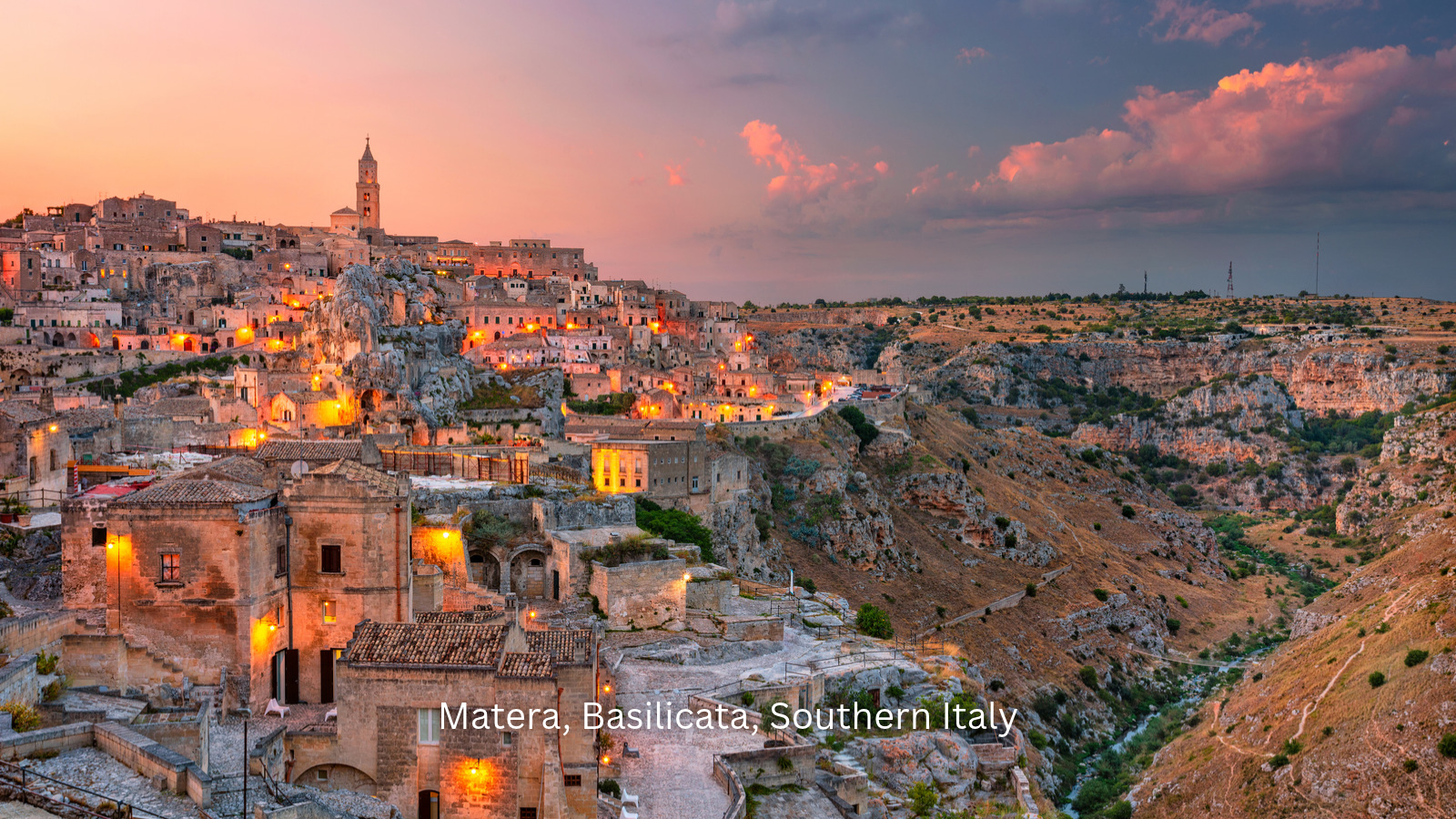
A little further inland, in the neighbouring region of Basilicata, Matera tells an even older story. One of the world's oldest continuously inhabited cities, it is famed for its Sassi districts: cave dwellings carved into the rock thousands of years ago. Today these ancient homes have been lovingly transformed into boutique cave hotels, candlelit restaurants and art spaces, without losing their sense of mystery. Walking here at dusk, as church bells echo around the ravine, is like stepping into a living history book.
Bari: a vibrant gateway to the south
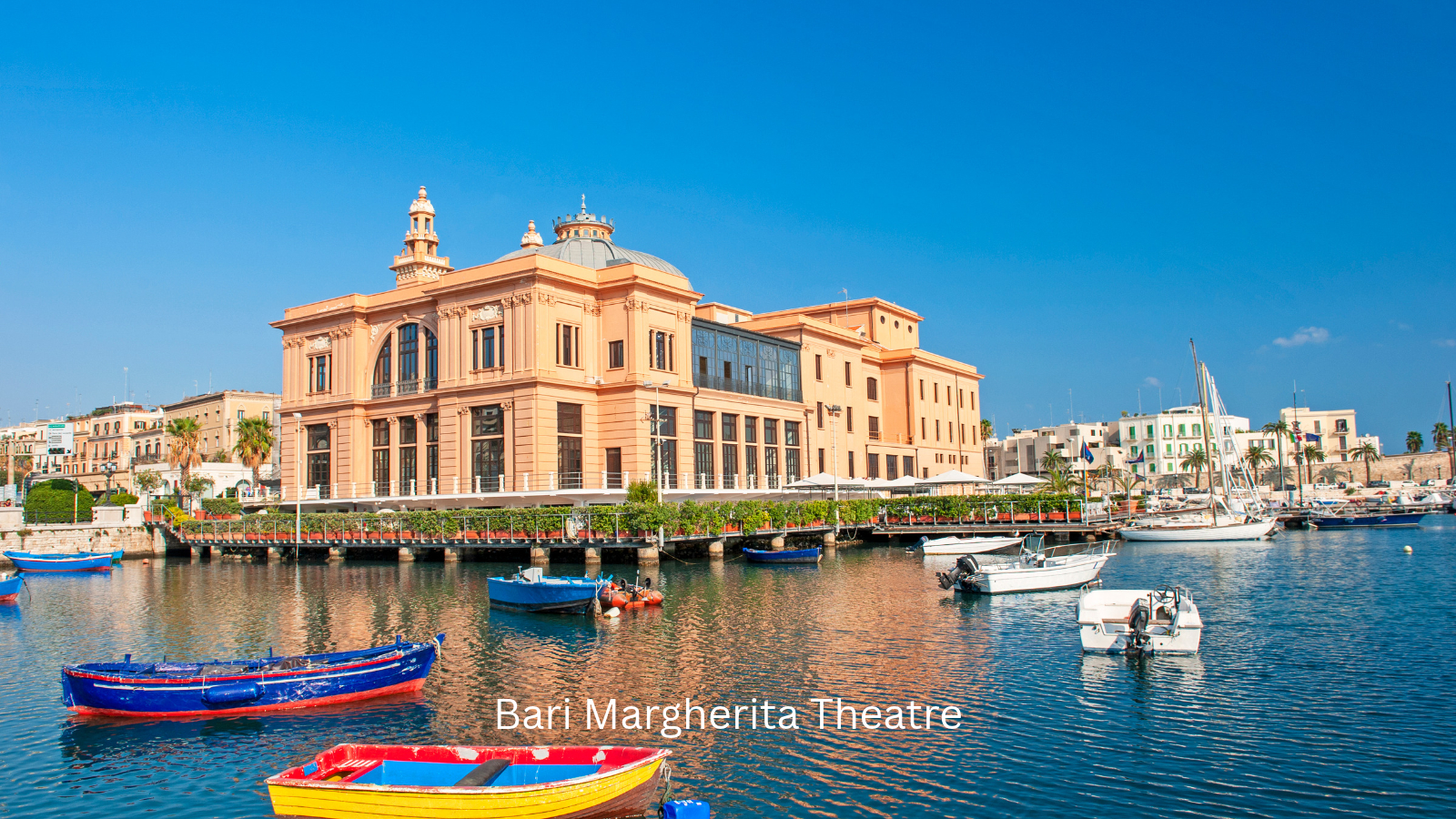
Bari is often where your journey into Puglia begins, but it is far more than a simple arrival point. Its historic centre, Bari Vecchia, is a maze of alleys and stone archways opening onto small squares and sea views. In the mornings, you can watch local women sitting outside their front doors, expertly rolling the region’s famous orecchiette pasta by hand.
The Basilica di San Nicola, with its solid Romanesque lines softened by Eastern and Byzantine touches, speaks of Bari’s maritime past and its connections across the Adriatic. As evening falls, the seafront promenade comes alive with families strolling, friends chatting over aperitivi, and streetlights reflecting on the water. Start your journey here, and you immediately feel the difference between the polished north and this warmer, more intimate south.
Polignano a Mare and Monopoli: drama and dolce vita on the Adriatic
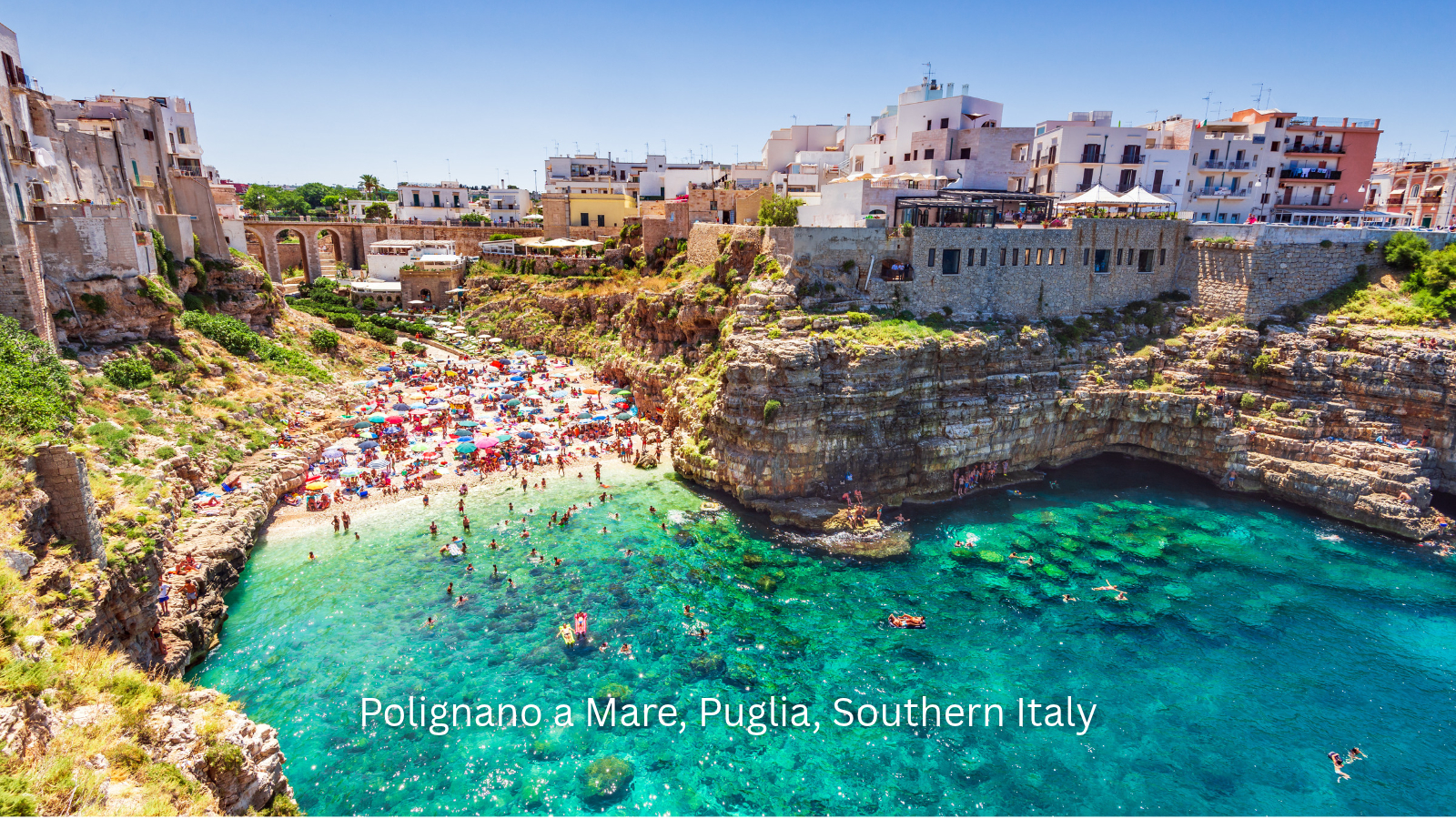
Head south along the coast to one of Puglia’s most iconic sights: Polignano a Mare. The town seems to cling to the edge of limestone cliffs, with white houses tumbling down toward a tiny pebble beach squeezed between rock walls. The Adriatic here is an intense blue, carved into sea caves and natural arches, and in summer you might see brave locals diving from dizzying heights into the water below.
Despite its picture-perfect looks, Polignano still feels lived-in and local. Wander its narrow lanes, pause at viewpoints that seem to float above the sea, then settle into a terrace restaurant for plates of just-caught seafood and a chilled glass of local white wine.
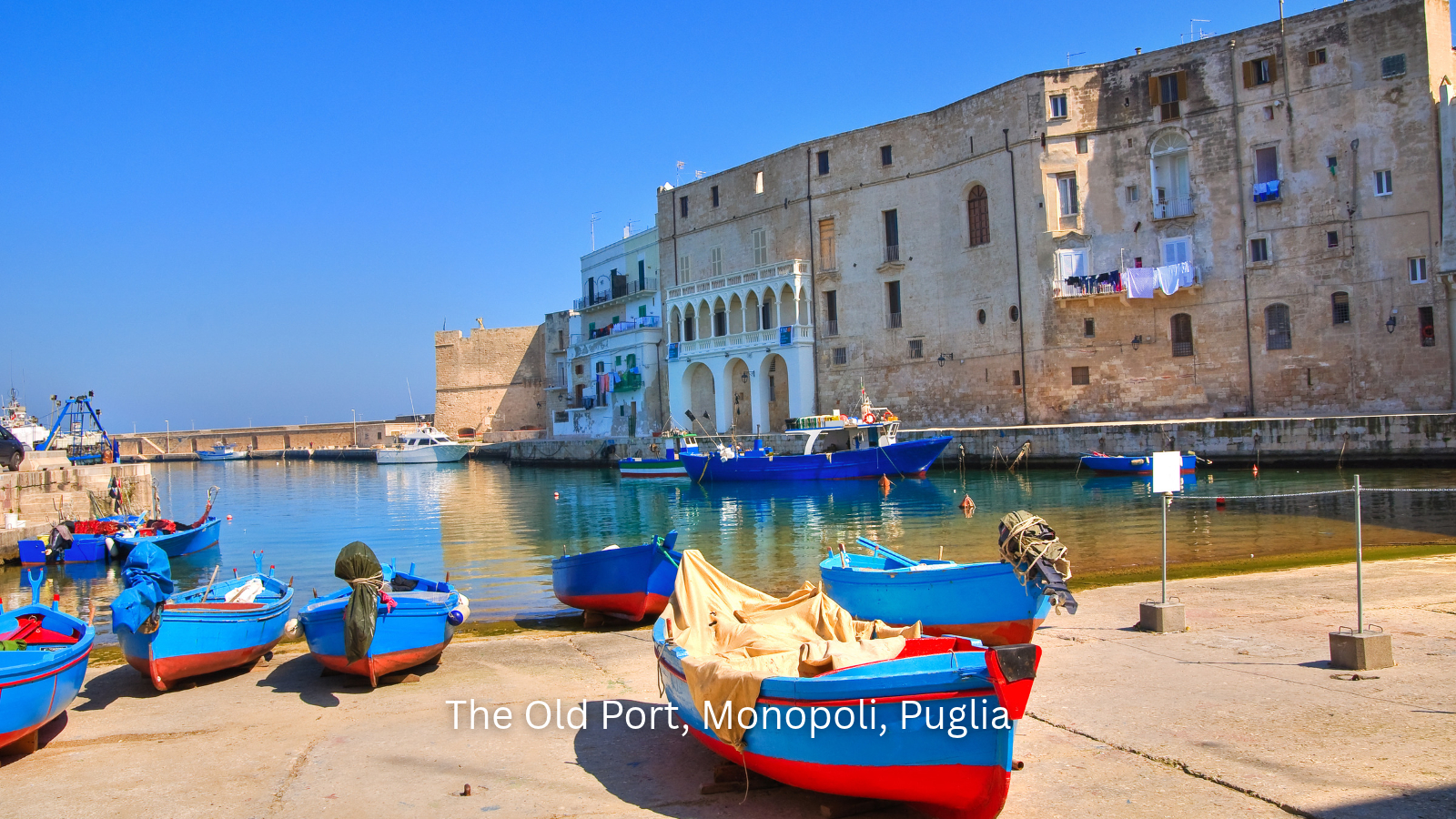
A short hop away, Monopoli offers a gentler but equally captivating charm. Its fortified old town curls around a pretty harbour filled with blue fishing boats. Golden-sand coves dot the nearby shoreline, perfect for a morning swim before you lose yourself in a long, lazy lunch. Monopoli is a wonderful base if you want easy access to the sea, plus an atmospheric, historic centre to explore each evening.
Alberobello, Locorotondo and Ostuni: the magic of the Valle d’Itria
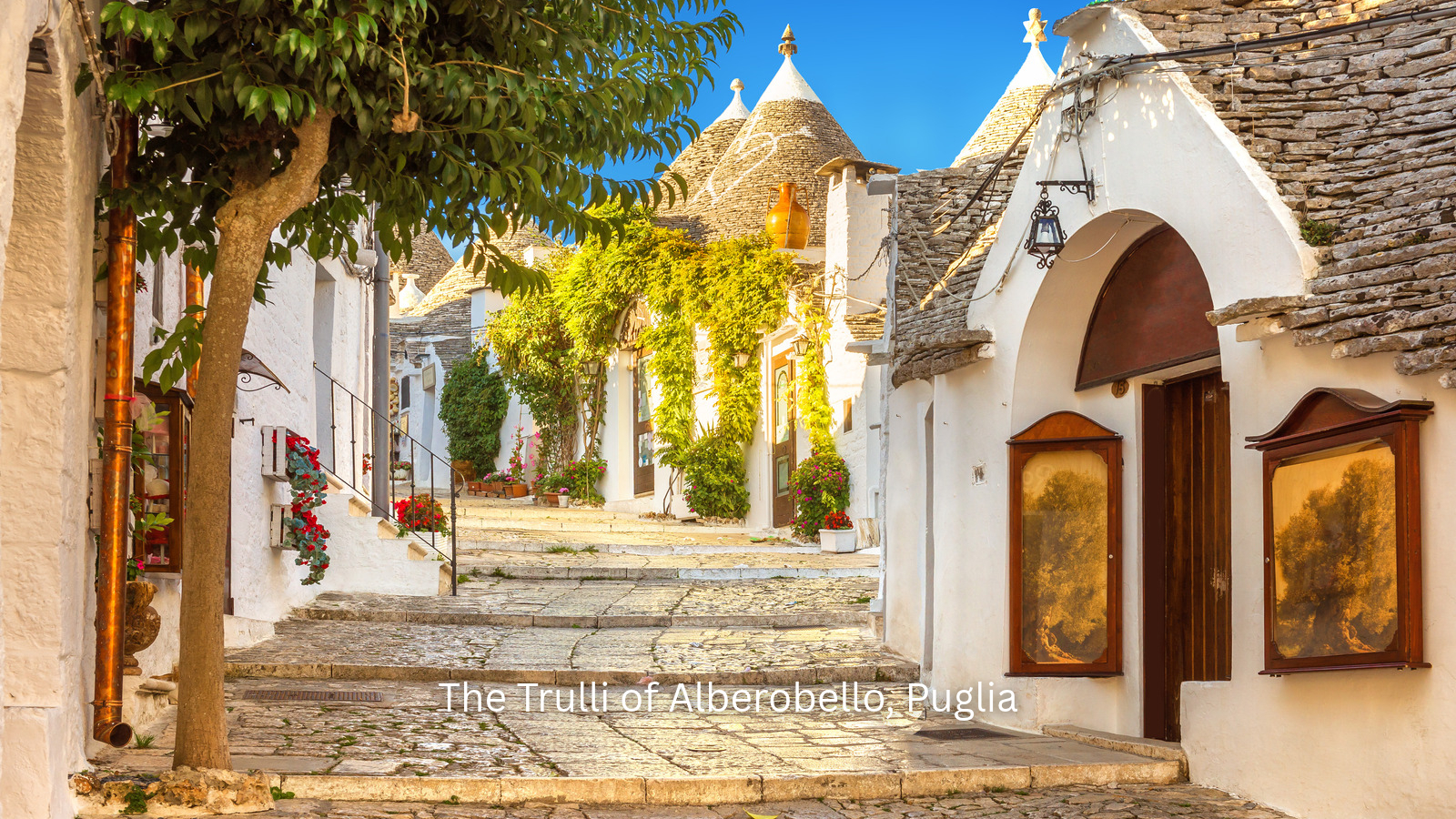
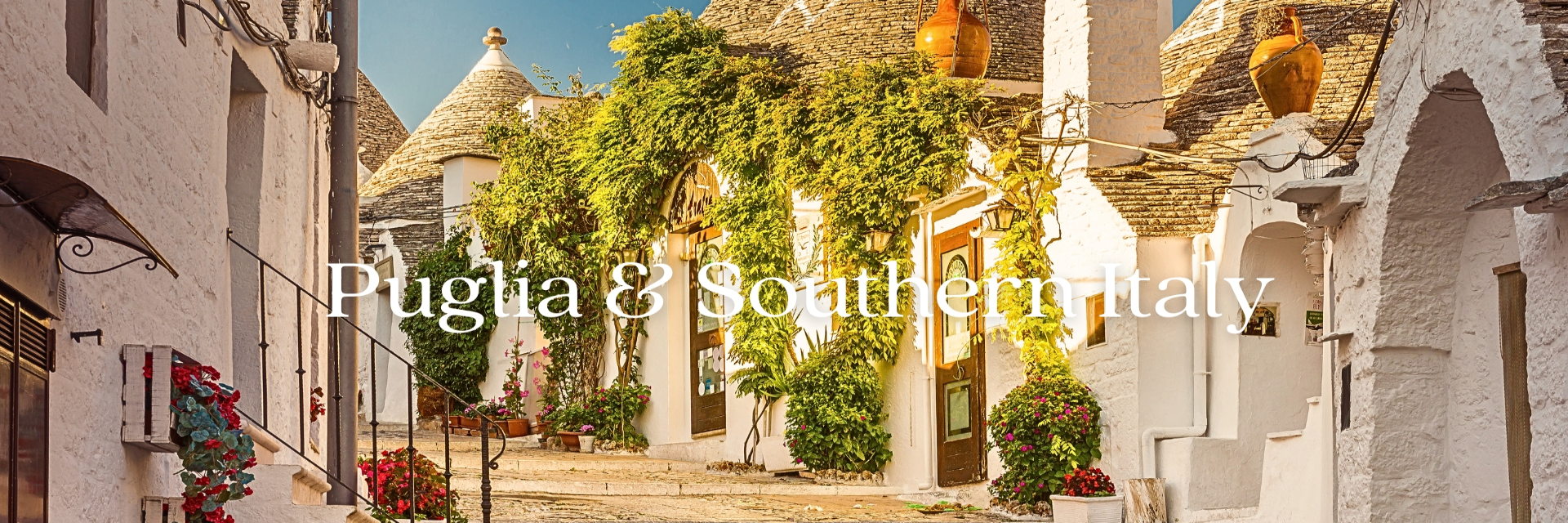
Turn inland, and Puglia reveals another face. The Valle d’Itria is a patchwork of vineyards, orchards, and ancient olive groves, punctuated by dry-stone walls and trulli, the conical-roofed stone houses that have become one of the region's symbols.
Alberobello is the trulli heartland. Whole neighbourhoods of these curious whitewashed dwellings line the streets; their grey stone roofs stacked like miniature stone spirals. Many have been turned into wine bars, craft boutiques and little restaurants, but they still retain a rustic, fairy-tale feel. Spending a night in a beautifully restored trullo is a memorable way to experience the region’s rural history.
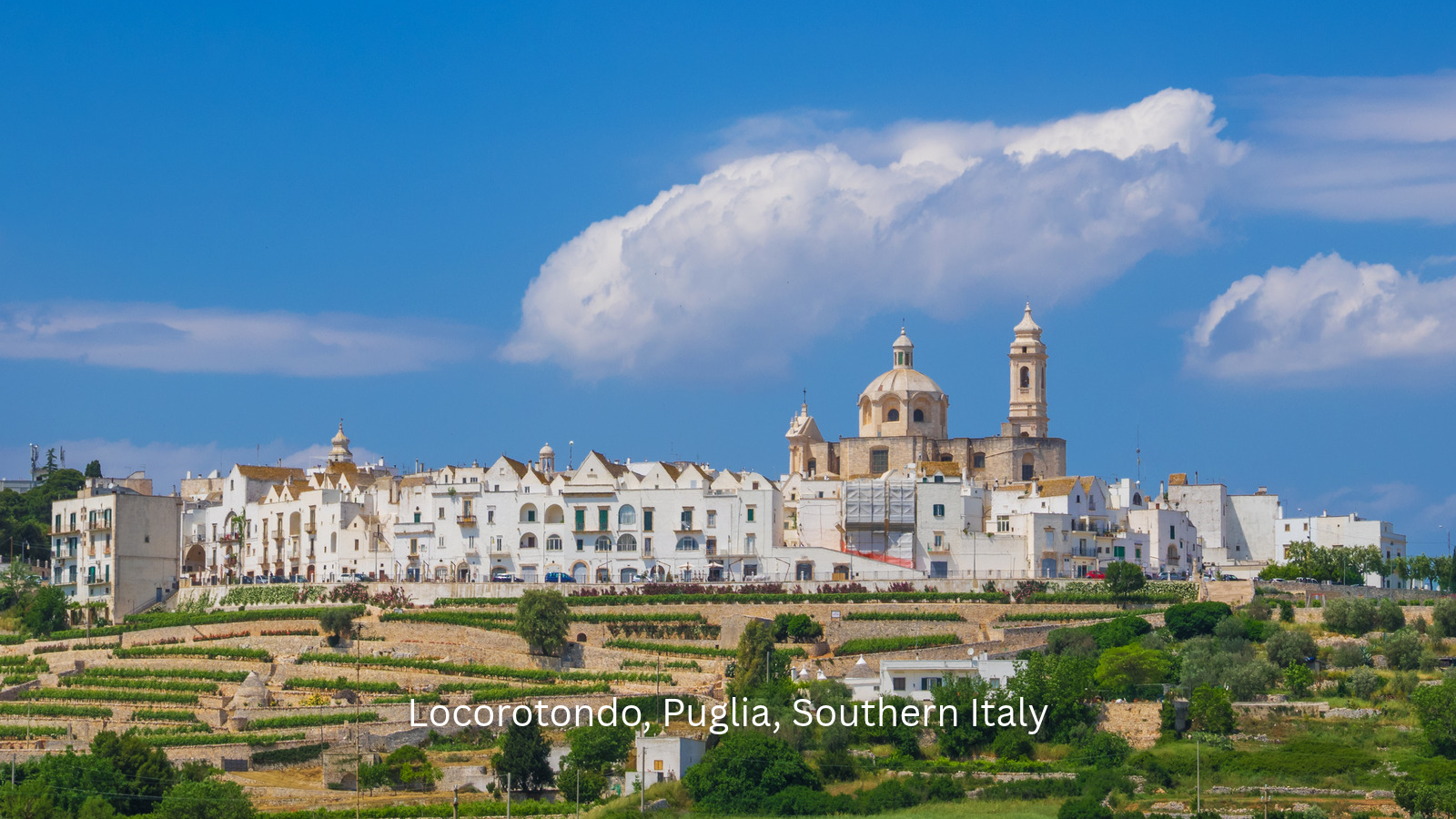
Nearby Locorotondo is officially one of Italy’s “borghi più belli”, and it is easy to see why. Its name refers to its round layout: a perfect ring of white houses perched on a hilltop, overlooking vineyards and fields. This is the place to sip a crisp glass of local white wine on a panoramic terrace and simply drink in the view.
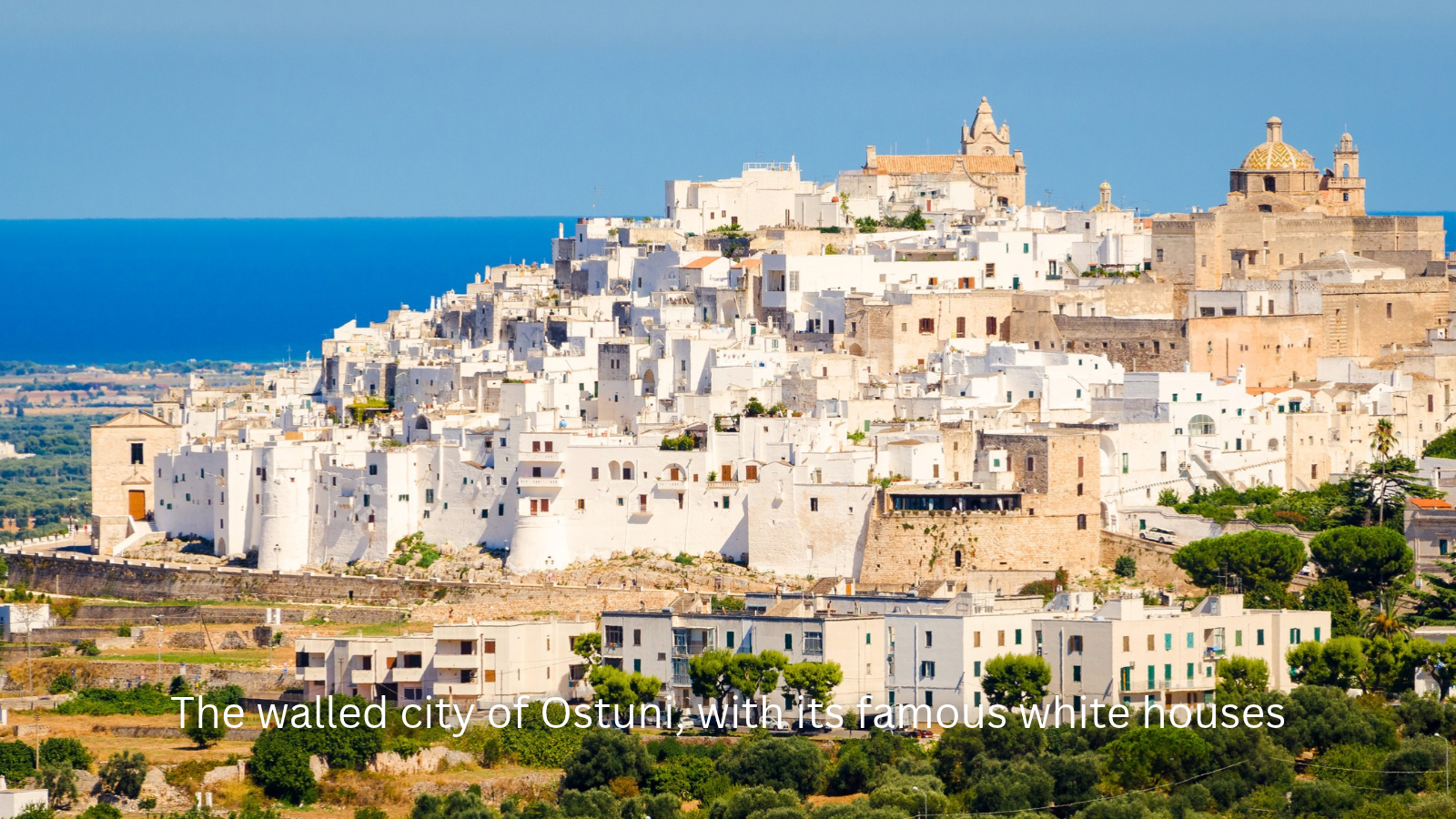
Ostuni, the “White City,” rises like a mirage from the olive groves. From afar, it looks almost like a Cycladic village transported to southern Italy. Up close, its maze of steep, winding streets leads you to viewpoints over the Adriatic, atmospheric piazzas and a wonderful selection of bars and restaurants. With its stylish small hotels and easy access to sandy beaches, Ostuni makes an excellent base for exploring central Puglia.
Lecce and Otranto: baroque splendour and edge-of-Europe views
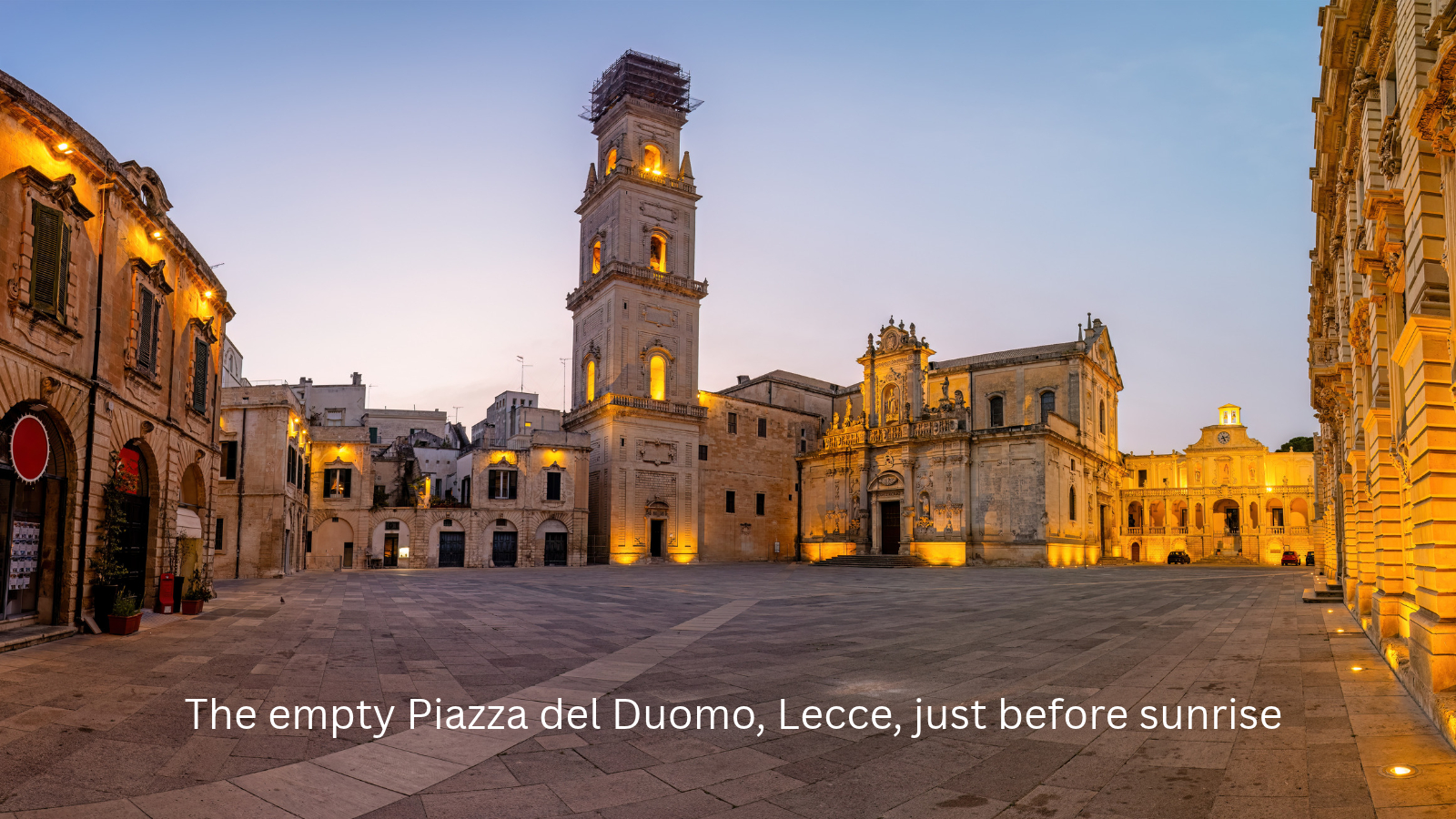
In the far south, the Salento peninsula narrows to a point between two seas. Lecce is its cultural capital, a city of warm honey-coloured stone and exuberant Baroque architecture. Here, churches and palazzi wear elaborate carvings: cherubs, flowers, fruits, and fantastical creatures that seem to spill and swirl across the façades. By day the stone glows in the strong southern light; by night, the city feels almost theatrical, with softly lit squares and courtyards filled with the clink of glasses and soft conversation.
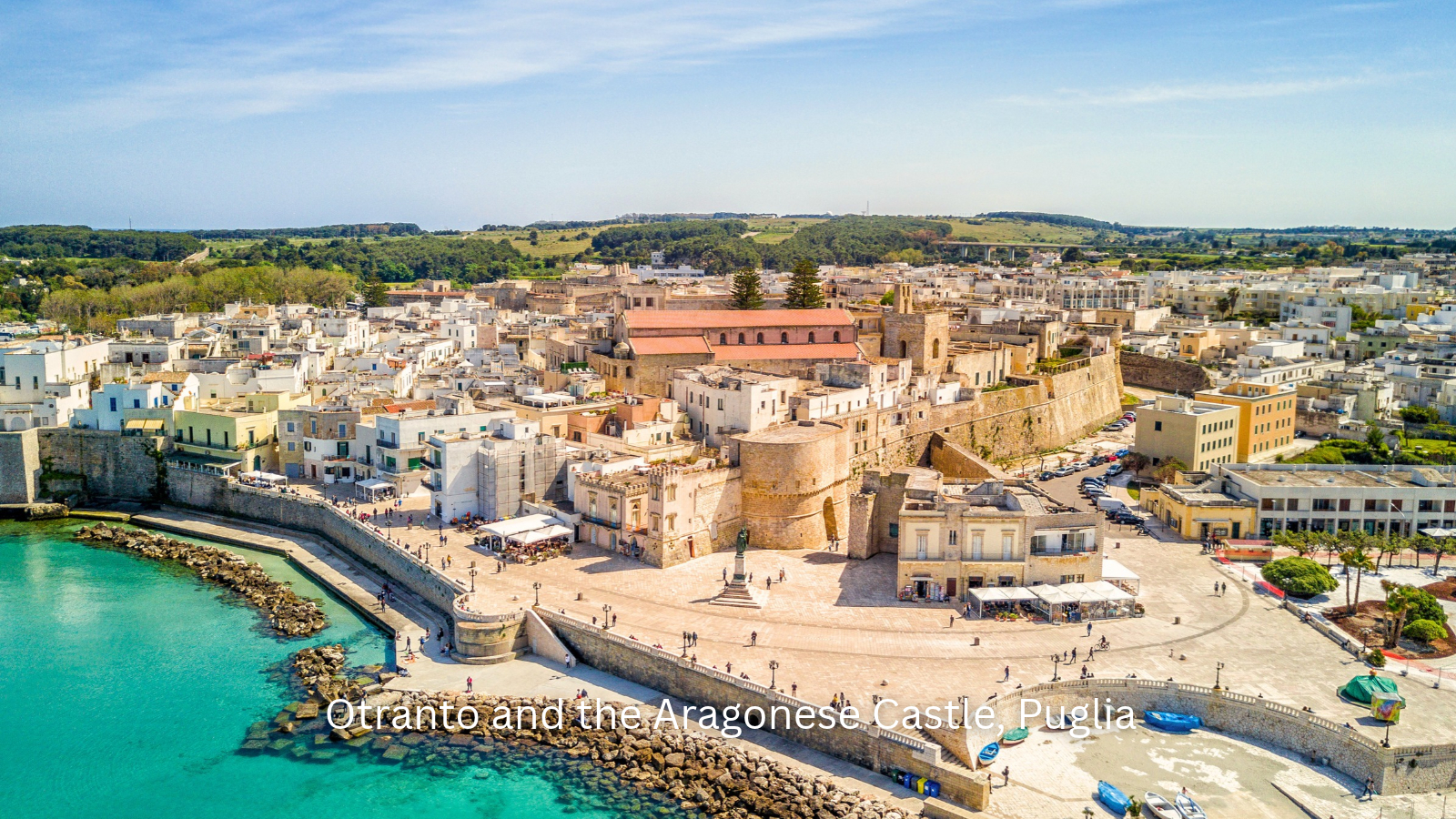
On the Adriatic coast, Otranto combines sea, history and a slightly wild beauty. Its stout Aragonese castle and medieval walls overlook clear, turquoise water. Inside the cathedral, a vast 12th‑century mosaic carpets the floor with biblical scenes, mythical beasts and strange symbols from another age. Just beyond the town, you find rocky coves and sandy stretches of beach, where locals and visitors share the same crystal-clear water. This is the easternmost point of Italy, and on clear days you can look across the sea and sense how close the Balkans really are.
Matera: sleeping inside history
No journey through Southern Italy would be complete without Matera. Straddling a dramatic ravine, the city appears almost sculpted from the rock itself. The Sassi districts are a jumble of houses, churches and stairways, many hewn directly into the stone. For centuries this was an area of deep poverty; today, after careful restoration, Matera has become one of Italy’s most atmospheric destinations.
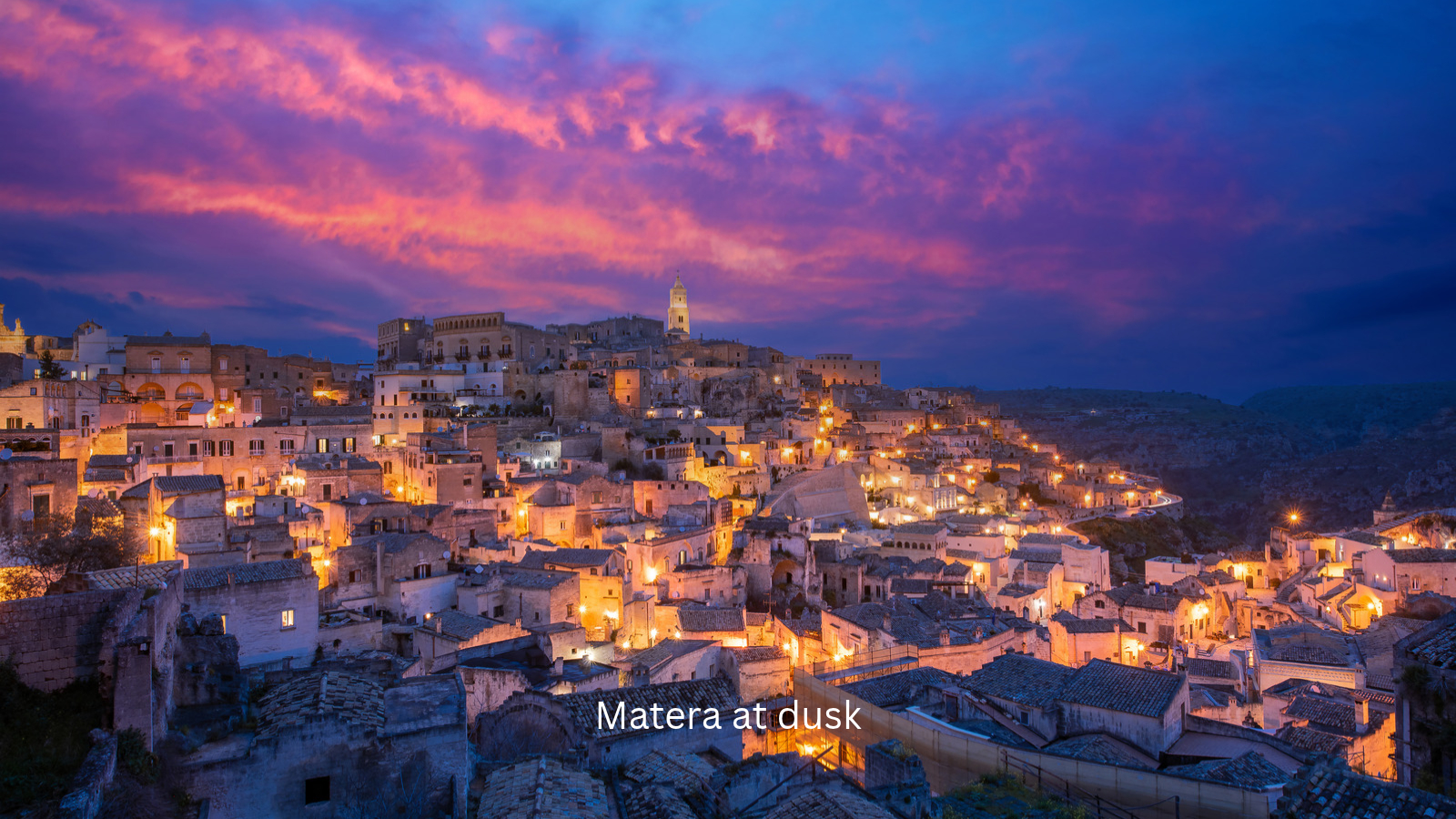
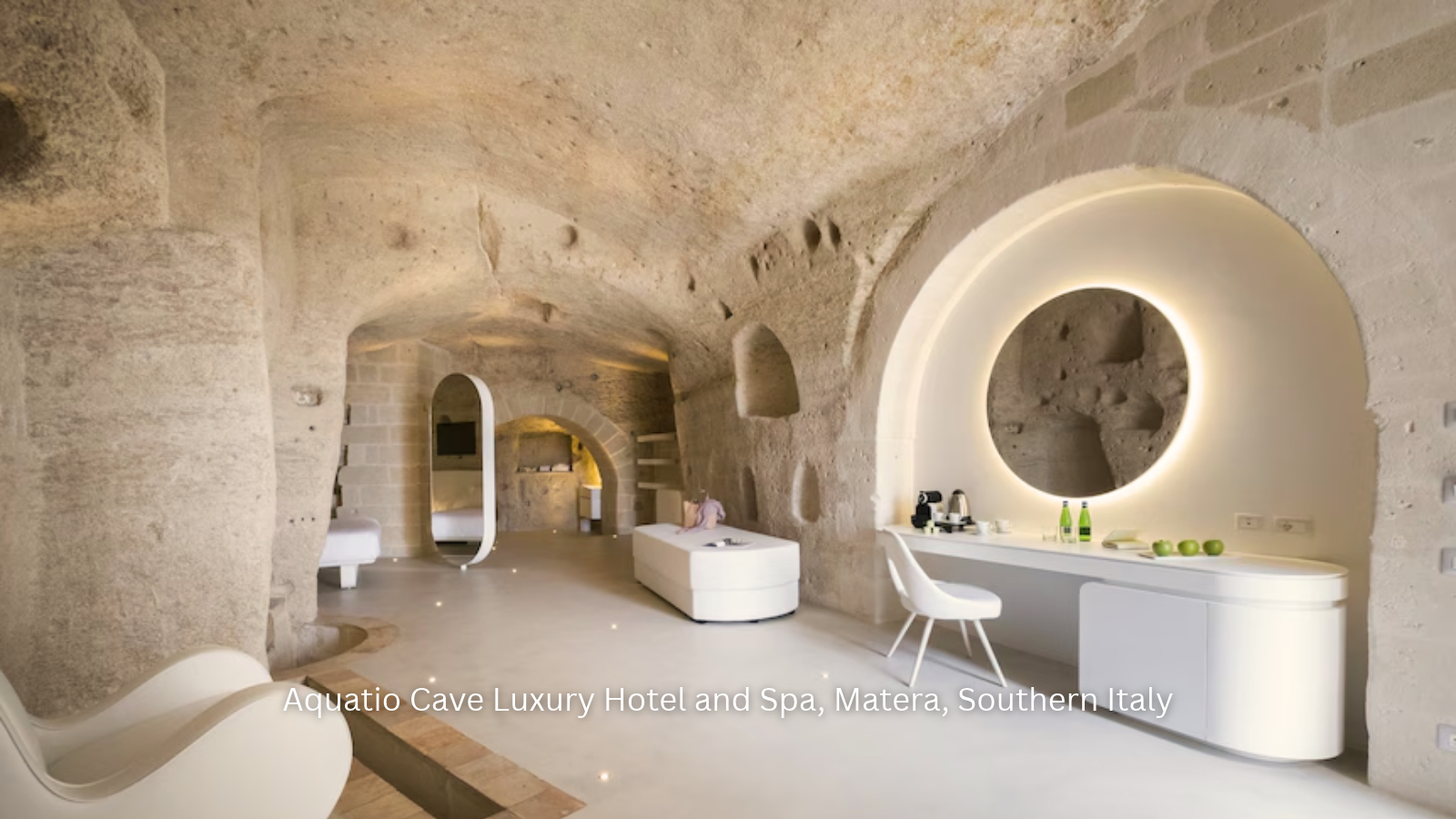
Staying in a cave hotel here is a unique experience: think candlelit suites with stone walls, contemporary comforts and terraces that look out over the labyrinth of rooftops and rock churches. As the sun sets and the city lights flicker on, Matera takes on a golden glow that feels almost otherworldly.
Flavours of the south: cucina povera with soul
The food of Puglia and Southern Italy might be rooted in “cucina povera” (the cooking of the poor), but it is rich in flavour, colour and character. The emphasis is on simple, seasonal ingredients: vegetables straight from the market, olives and olive oil from trees that may be older than many buildings, seafood from the surrounding seas and durum wheat grown in the sun.
As you travel, look out for:
- Orecchiette alle cime di rapa: The region’s signature pasta, shaped like little ears, served with turnip tops, garlic, chilli and anchovies for a satisfying, gently bitter bite.
- Focaccia barese: Thick, soft and generously topped with cherry tomatoes, olives and oregano, bathed in local olive oil. Perfect as a snack on the move or a relaxed lunch with a glass of wine.
- Tiella barese: A comforting oven bake of rice, potatoes and mussels, often with tomatoes and courgettes, that showcases Puglia’s connection to both land and sea.
- Burrata and local cheeses: Burrata, with its delicate outer shell and creamy centre, was born here. Add in fresh mozzarella, ricotta and aged caciocavallo, and you have a cheese lover’s dream.
- Seafood crudo and grilled fish: Along the coast, raw or lightly marinated seafood is a speciality. Expect octopus, prawns, mussels and clams, as well as simple grilled fish seasoned with little more than lemon, olive oil and sea breeze.
- Dolci of the Salento: In and around Lecce, seek out pasticciotto, a warm shortcrust pastry filled with silky custard, and cool off with almond granita or an affogato in the afternoon.
- Local wines: Robust reds like Primitivo and Negroamaro pair beautifully with hearty dishes, while the fresh, mineral whites of the Valle d’Itria are ideal for long lunches in the sun.
Dining here is never rushed. Meals linger late into the evening, often outdoors under a canopy of stars and fairy lights, with carafes of local wine and that easy, generous southern hospitality.
What makes Puglia and Southern Italy so special is the way everything comes together: ancient Greek echoes in a whitewashed hill town, a Baroque church glowing in the evening light, a fisherman mending his nets beside a medieval wall, a bowl of pasta that tastes of sunshine and sea.
This is not a destination to tick off in a hurry. It is somewhere to savour slowly: drifting from town to town, mixing coastal days with countryside discoveries, and allowing yourself the time to simply sit, watch and soak it all in.
If you would like to explore Puglia, Matera, and Southern Italy in a way that suits your travel style, I would be delighted to design a tailor-made itinerary for you.