
Driving in America for UK Travellers
A practical guide to driving in America for UK travellers, covering US road rules, car hire, insurance, tolls, parking and the common mistakes to avoid on a USA road trip.
Driving in America is one of those things that sounds slightly intimidating before you do it. Big roads. Big cars. Big junctions. Everyone driving on the wrong side.
The good news is that driving in the USA is usually very manageable for UK travellers, especially once you get used to automatic cars, wider roads and the fact that distances are not quite as small as they look on a map.
For many USA road trips, driving is part of the experience. California, Florida, Route 66, New England, the Deep South and the national parks all work because you can explore at your own pace, stop where you want and build the route around what you actually want to see.
In this guide, I’ll cover what UK travellers need to know about driving in America, including the practical bits, common mistakes and how to make a USA fly drive feel exciting rather than mildly stressful.
If you’re still planning the wider trip, start with my USA Fly Drive Guide for the full overview of routes, timings and planning advice. You may also find my How To Plan A USA Fly Drive Holiday guide useful if you’re still working out flights, route order, hotels and car hire.
Can UK Travellers Drive in America?
Yes. UK travellers can usually drive in America with a valid UK photocard driving licence, but requirements can vary by state and by car hire company, so this is something I always check as part of the booking process.
You may also need, or be advised to carry, an International Driving Permit depending on the state you’re visiting. The rules are not always the same across the USA, which is useful.
The key point is not to assume. Before you travel, check the latest official guidance and the specific requirements for the states on your route. I’ll also help flag anything relevant when planning your USA fly drive.
You should normally travel with:
- Your UK photocard driving licence (also need this for any additional drivers)
- A credit card in the lead driver’s name - strongly recommended, as some rental companies don't accept debit or prepaid cards. Check the supplier's requirements before travelling.
- Your car hire voucher or booking reference
- Passport and travel documents
- Any required International Driving Permit, if applicable
- Details of your car hire insurance and inclusions
The name on the car hire booking, driving licence and credit card should match.

Is Driving in America Difficult?
Most UK travellers find driving in America easier than expected, especially outside major cities.
The roads are generally wider, junctions are often clearer, parking spaces are bigger and automatic cars are standard. Once you’ve adjusted to driving on the right, the actual driving can feel quite straightforward.
The trick is building the route properly. That means avoiding unnecessary city driving, choosing well-located hotels, allowing enough time between stops and not treating every drive as if it will be smooth, scenic and completely free of petrol stations, roadworks and someone needing the loo.
Driving on the Right
The biggest adjustment for UK drivers is driving on the right-hand side of the road.
It feels odd at first, but most people settle into it quickly, especially in an automatic car. The main thing is to take the first hour gently, avoid collecting the car in the middle of a stressful city if possible, and give yourself time to get used to the road layout.
Simple tips:
- Take your time leaving the car hire depot – look both ways!
- Follow other traffic at junctions and roundabouts (yes they do have them, rare but they exist)
- Be extra careful when turning left across traffic
- Think carefully when pulling out of petrol stations, car parks or viewpoints
- Avoid overpacking the first driving day
The moments that catch people out are often not the big roads. They’re the small resets: leaving a car park, turning out of a hotel, or setting off again after lunch when your brain has gone back to UK mode.
Automatic Cars and Car Hire
Most rental cars in America are automatic, which is usually good news for UK travellers. It gives you one less thing to think about while adjusting to driving on the right.
Car hire in the USA is generally straightforward, but the details matter. The cheapest headline price is not always the best option once you look at insurance, one-way fees, additional drivers, luggage space, fuel policies, child seats, toll passes and airport collection charges.
Most US car hire companies require drivers to be at least 21, although some have higher minimum ages or additional charges for drivers under 25. I'll check the requirements for your chosen supplier before booking.
When I plan a USA fly drive, I’ll look at the route, luggage, driving distances and hotel locations before recommending the car type. Bigger is not always better, but too small gets annoying very quickly.
Car Hire Insurance in America
Car hire insurance in the USA can be confusing, so it is worth getting right before you travel.
You’ll often see terms such as CDW, LDW, liability cover, excess, roadside assistance and supplementary insurance. The exact wording can vary by supplier, and that is where things can become messy.
The important thing is to know what is included before you reach the desk. You do not want to be tired after a long-haul flight, standing at a rental counter, trying to decide whether you need another insurance product while someone points at a screen and uses too many acronyms.
When you book through me, I’ll help check the car hire inclusions, explain what is covered, and flag any extras that may be offered locally. That way you can collect the car with a clearer idea of what you have already paid for and what you may choose to add.
Fuel, Tolls and Parking
Fuel in the USA is usually cheaper than in the UK but fuel still needs budgeting properly.
Petrol stations can work slightly differently too. You may need to prepay, select the fuel grade, use the ZIP code workaround if the pump asks for one, or go inside to pay. None of it is difficult, but the first attempt can make you feel like you’ve never operated a vehicle before.
Tolls vary by state. Florida, parts of the East Coast, some bridges, tunnels and city approaches can involve toll roads or electronic tolling. Your car hire company may offer a toll pass or charge tolls back after travel, so it’s worth knowing how that works before you set off.
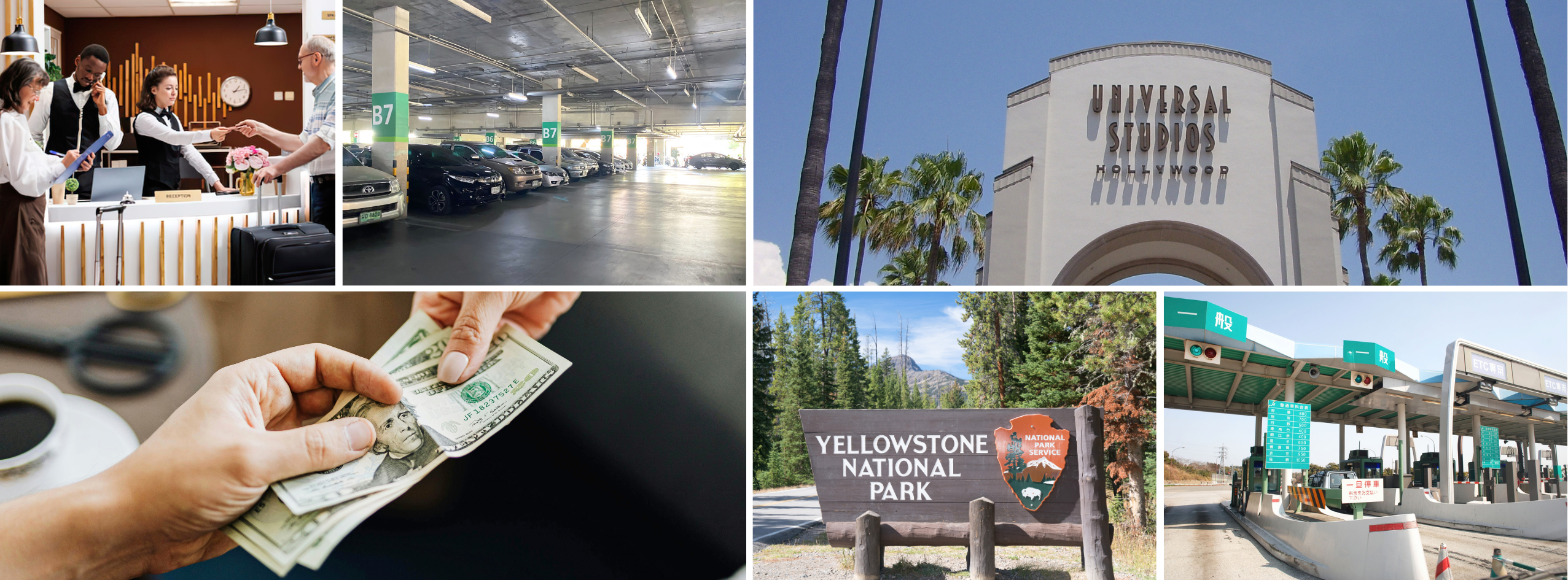
Parking is another hidden cost. City hotels, beach resorts, theme parks and national park areas can all have parking charges. These can add up quickly, especially in places such as San Francisco, Los Angeles, Miami, Boston, New York, Orlando and popular coastal towns. Parking is generally free outside major cities.
These costs are easy to overlook when you're budgeting. My How Much Does A USA Road Trip Cost? guide gives a fuller breakdown of flights, hotels, car hire and the extras that can add up along the way.
Driving Distances in America
This is one of the biggest mistakes UK travellers make on a USA road trip. America is big.
But the scale really does catch people out. A drive that looks manageable on a map can become a long day once you include traffic, fuel stops, photo stops, lunch, roadworks, weather, national park entrances or simply wanting to enjoy the journey.
For a good USA fly drive, I’d rather build in fewer stops and a better pace than cram in every place that looks vaguely nearby. Nearby in America is not the same as nearby in the Lake District.
City Driving in America
Some American cities are easy enough to manage by car. Others are best avoided until you need to leave.
I’d usually avoid collecting a hire car at the start of a city stay unless you genuinely need it. In places like San Francisco, Boston, Chicago, New York, Washington DC, Seattle, Los Angeles, Miami and New Orleans, the car can quickly become an expensive ornament.
Parking costs money. Traffic takes time. One-way systems can be irritating. Hotels may charge daily parking fees. And in many cities, you’ll spend a lot of the time walking, using public transport, taking taxis or using rideshare apps anyway.
The better option is often to start with a few hotel nights, enjoy the city without a car, then collect the hire car when the road trip properly begins.
City-heavy routes need particular thought. My Deep South Road Trip Guide, for example, explains how to combine Nashville, Memphis and New Orleans without spending unnecessary time driving and parking in city centres.
Driving in National Parks
Driving in America’s national parks is the whole point of a USA road trip.
Places like Yosemite, Zion, Bryce Canyon, Grand Canyon, Acadia, Yellowstone, Grand Teton, Arches and Rocky Mountain National Park all offer spectacular driving routes, viewpoints and scenic stops.
But national parks also need planning. Roads can be seasonal, parking can fill early, shuttle systems may operate, permits may be needed for certain areas, and weather can change quickly.
If national parks are a big part of your plans, my USA National Parks Road Trip Guide covers the classic Southwest route, including Zion, Bryce Canyon, Monument Valley and the Grand Canyon.
Road Rules That Feel Different
Most US road rules will feel familiar once you are settled, but a few things can feel different for UK drivers.
Common differences include:
- Driving on the right
- Turning right on red in some states, unless signs say otherwise — always after coming to a complete stop.
- Stop signs — you must come to a full stop; rolling through slowly can still get you pulled over.
- Four-way stop junctions — the first vehicle to arrive usually goes first. If two arrive at the same time, the driver on the right has priority.
- Uncontrolled junctions — where there are no stop signs or lights, priority rules can vary but usually a first come, first served job. Please just be careful, I don’t know who was responsible for these crazy junction designs.
- Different speed limits by state and road type and can change without notice.
- School buses having strict stopping rules — when the bus is stopped with red lights flashing, traffic in both directions usually has to stop, unless there is a central reservation or physical divider separating the carriageways. Check the rules for each state.
- Lane discipline feeling different from the UK — drivers may pass on either side but generally the slower lane is still on the right.
- Tolls and electronic tolling systems — many are cashless and charged electronically.
Sat Nav, Maps and Phone Signal
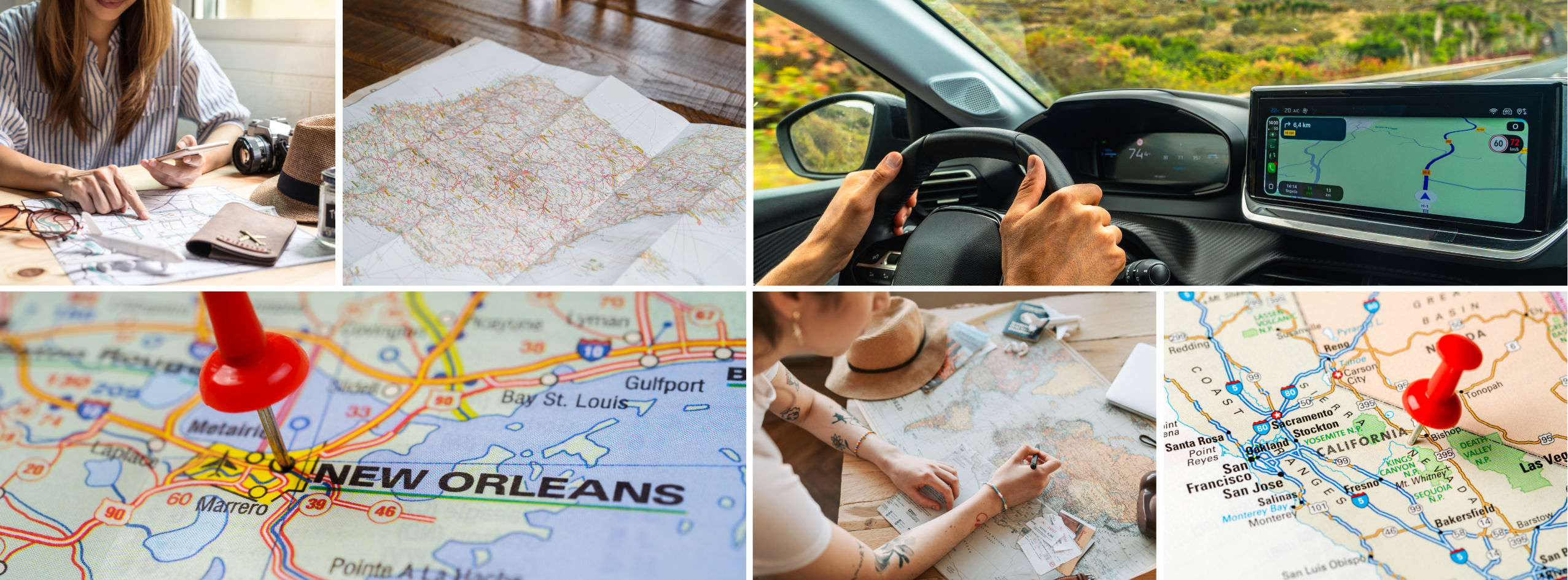
Sat nav is useful, but I would not rely on mobile signal everywhere.
In cities and on major roads, phone navigation is usually fine. In national parks, deserts, mountains, remote coastal areas and parts of the American West, signal can disappear.
Download offline maps before you travel, especially for national parks and rural routes. It is also worth checking the route before setting off rather than blindly following whatever the phone suggests.
A sat nav can send you along a road that is technically possible but not ideal, especially if you are tired, in a large vehicle or driving somewhere remote. Be especially careful following a sat nav onto an unpaved or off-road route. Most rental companies restrict driving on gravel tracks, dirt roads or roads that are not officially maintained, and doing so can affect your cover if something goes wrong.
This is even more important if you're hiring a motorhome. My Motorhome Fly Drives In The USA guide covers the extra considerations around vehicle size, road restrictions, campsites and RV hire.
Common Driving Mistakes on a USA Road Trip
A USA fly drive can be straightforward, but these are the mistakes that cause the most hassle.
Common mistakes include:
- Collecting the car too early in a city stay
- Booking a car that is too small for the luggage
- Underestimating driving distances
- Building in too many one-night stops
- Forgetting about parking charges and tolls
- Planning long drives after overnight flights
- Not checking national park access or seasonal roads
- Relying completely on phone signal
- Assuming every state has the same driving rules
Most of these are avoidable with proper planning (by me).
Best USA Road Trips for UK Drivers
Some USA road trips are easier for first-time UK drivers than others.
Florida is one of the most straightforward, especially if you are combining Orlando, the Gulf Coast, Miami, the Keys and the Everglades. Roads are generally manageable, but tolls, theme park parking and city traffic still need thinking about. My Florida Fly Drive Guide covers the full route, including Orlando, Miami, the Florida Keys, the Everglades and the Gulf Coast.
California is a classic first-time route, but city driving in San Francisco and Los Angeles is best handled carefully. The Pacific Coast Highway, Yosemite and the coast are wonderful, but hotel location and route order matter. My California Road Trip Guide explains how I'd put the classic route together, including San Francisco, Yosemite, Big Sur and Los Angeles.
New England is a good option if you want a more compact and scenic route from Boston, with coast, mountains, countryside and autumn colours. The roads can be smaller and busier in popular seasons, but the distances are usually more manageable than the American West. If you prefer a shorter-distance route with plenty of scenery, my New England Road Trip Guide covers Boston, Cape Cod, Maine and Vermont.
The Deep South works well as a hotel-based road trip, with Nashville, Memphis, the Mississippi River and New Orleans. The driving is usually manageable, but I’d avoid making the route too rushed.
The national parks and Southwest routes are spectacular, but distances are bigger and planning matters more. Las Vegas, Zion, Bryce Canyon, Page, Monument Valley and the Grand Canyon can work brilliantly with the right timings.
Route 66 is iconic, but it is long. Very long. It suits people who want the journey itself, not just the highlights. My Route 66 Road Trip Guide covers the full Chicago-to-Santa Monica journey, including the stops worth making and how long you realistically need.
If you’re choosing between routes, my Best USA Road Trips For First-Timers guide is a good place to start.
My Advice
My honest advice? Don’t let driving in America put you off a USA road trip. For most UK travellers, it is much more manageable than expected.
But don’t treat it as an afterthought either.
The difference between a brilliant USA fly drive and a tiring one often comes down to practical details: where you collect the car, how long the drives are, where the hotels are, what parking costs, whether the car fits the luggage, and whether the route has enough breathing space.
When you book through me, I’ll help plan the route properly. I’ll look at flights, car hire, insurance, hotel locations, drive times, tolls, parking, national parks and the bits that are easy to miss until you’re there.
Done well, driving in America is part of the fun.
Done badly, it is a car park charge, a six-hour drive and someone saying “I thought it was closer.” Nobody needs that.
Ready to Plan Your USA Fly Drive?
If you’re thinking about a USA fly drive holiday, get in touch and I’ll help plan and book a tailor-made road trip that fits your budget, travel dates and travel style.
Whether you want California, Florida, New England, Route 66, the Deep South, the national parks or a motorhome road trip, I’ll help build the route properly, choose the right car hire and make sure the driving works as part of the holiday rather than becoming the holiday.
Continue Planning Your USA Road Trip
If you’re still researching, these guides will help:
- USA Fly Drive Guide — the complete overview of routes, timings and planning advice
- How To Plan A USA Fly Drive Holiday — practical advice on flights, hotels, car hire and route planning
- How Much Does A USA Road Trip Cost? — realistic budgets and where the hidden extras appear
- Best USA Road Trips For First-Timers — compare California, Florida, Route 66, New England, the Deep South and the national parks
- California Road Trip Guide — a classic first-time route from San Francisco to Los Angeles
- Florida Fly Drive Guide — useful if you want Orlando, Miami, the Keys and the Gulf Coast
- New England Road Trip Guide — Boston, Cape Cod, Maine, Vermont and autumn colours
- USA National Parks Road Trip Guide — ideal if you’re planning the Southwest, Grand Canyon, Zion, Bryce or Monument Valley
- Motorhome Fly Drives In The USA — useful if you’re comparing RV road trips with car-and-hotel routes